

 English
 русский
 Español
 Português
 عربى
عربى italiano
ODM Pet Nail Clipper Sourcing: Custom Manufacturing Guide for Pet Brands
Content
- 1 What ODM Actually Means for a Nail Clipper
- 2 Specifications That Decide Whether the Clipper Sells or Gets Returned
- 3 Design Details Buyers Underestimate
- 4 Materials, Coatings and Compliance
- 5 Where the Money Actually Sits
- 6 From Sketch to Shipment: A Realistic Timeline
- 7 Quality Checks Worth Writing Into the Purchase Order
- 8 Procurement Risks and How to Avoid Them
- 9 Frequently Asked Questions
- 10 Next Step: Send the Clipper, Not Just the Specification
A pet brand in Rotterdam sends over a photo of a competitor's nail clipper, a target retail price of 6.90 EUR, and one question: can you match this blade and put our logo on the handle before March?
That single email is what an ODM pet nail clipper project looks like in practice. It is not a catalogue order; it is a development task with a launch date attached. The outcome depends less on assembly capacity than on how early the specification is frozen.
The short answer: an experienced ODM partner can usually adapt an existing clipper platform in 6 to 8 weeks, and build a brand-new model in 12 to 16 weeks. The real risk is not the calendar. It is the small decisions made in week one - blade angle, spring rate, guard depth, handle material - that decide whether the tool cuts cleanly on a 4 kg cat or splits the nail on a 30 kg dog.
What ODM Actually Means for a Nail Clipper
OEM and ODM are often used as if they were interchangeable. On a purchase order for a pet nail clipper, they are not.
- OEM: your brand already owns the drawings. The factory manufactures to your file and you carry the design responsibility.
- ODM: the factory owns a platform design, usually a plier-type or guillotine-type clipper, and adapts it for you. Blade shape, spring, guard, coating, handle colour, logo and packaging can all change without a new mold as long as the overall size stays the same.
Most real projects land somewhere between the two: the body comes from an existing verified platform, while the blade and the guard are reworked to hit a specific sharpness or safety requirement. A full ODM package should include 2D dimension drawings and 3D STEP files, a material declaration for blade, spring and handle, a blade hardness and edge angle report, sample tiers (pre-production, T1 tooling, golden sample), and a packaging dieline with artwork and barcode placement.
Starting from a validated platform model such as this stainless steel pet nail clipper is usually the fastest route, because the blade geometry and the spring have already been cycled in testing.
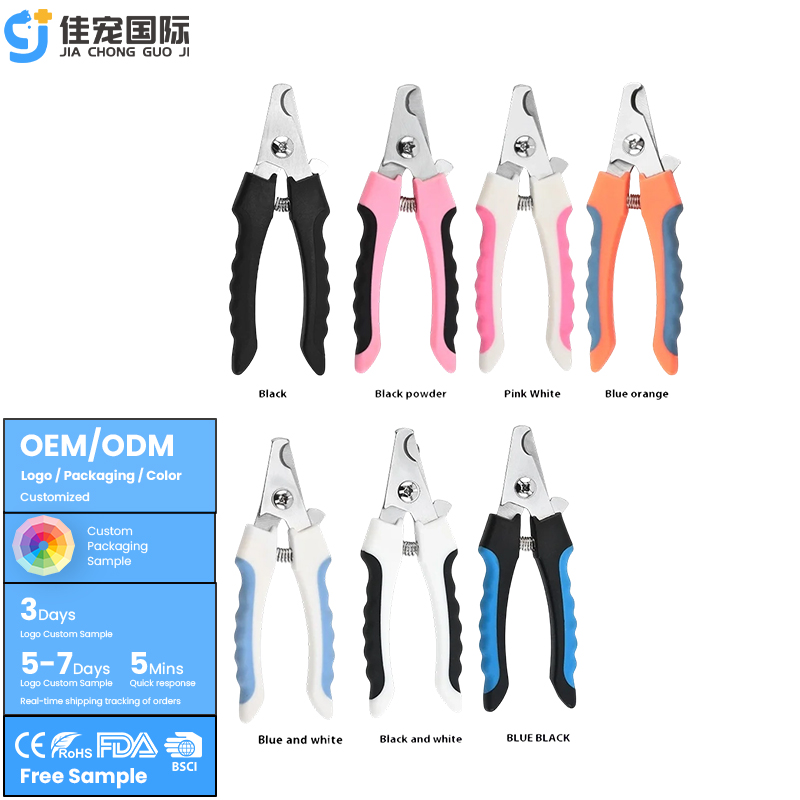 Stainless Steel Pet Nail Clipper with Non-Slip HandleA straight-blade, lever-operated stainless steel clipper with non-slip handle and one-button lock; its simple structure suits medium-hardness nails.View Product →
Specifications That Decide Whether the Clipper Sells or Gets Returned
These are the numbers worth writing into the specification sheet. None of them is marketing detail; each one is something a customer notices within the first month of use.
| Specification | Typical ODM range | Why it matters |
|---|---|---|
| Blade material and hardness | 3Cr13 or 4Cr13 stainless steel, 52-56 HRC | Below 50 HRC the edge dulls within months; above 58 HRC it chips at the pivot |
| Edge angle | Single bevel, 18-25 degrees | Shallower angles chip faster; steeper angles crush instead of cutting |
| Spring | Torsion spring, 1.2-1.5 mm wire, 8,000-12,000 cycle target | Decides whether the tool still closes firmly after a year of weekly use |
| Safety guard | 1.5-3 mm gap, fixed or removable | Prevents over-cutting the quick, which matters most on dark nails |
| Handle and length | TPR over ABS or PP, 8-14 cm overall | Grip and length differ between small cats and large dogs |
| Surface finish | Polished, satin, or PVD titanium-look coating | Coatings are often marketed as "titanium blades"; ask for the substrate spec |
| Retail packaging | Blister card, hang tag, kraft box or pouch | Drives shelf presence and adds 0.05-0.25 USD per unit |
If you are building a grooming range rather than a single SKU, it helps to see how the clipper sits next to combs, brushes and bathing tools. Our pet cleaning and grooming product selection guide covers that bundle logic.
Design Details Buyers Underestimate
Blade Geometry and Hardness
Two numbers govern cutting quality: edge angle and hardness. A single-bevel edge ground at 18 to 25 degrees cuts cleanly without crushing the nail plate. At 15 degrees the edge feels razor sharp in a demo but chips within a few hundred cuts; at 30 degrees the blade starts to squeeze the nail, which is exactly what makes a pet pull its paw away. Pair that geometry with 52-56 HRC martensitic stainless steel and you get an edge that holds for years, not weeks.
The Spring Is the Weak Point
Most warranty claims on a nail clipper trace back to the torsion spring, not the blade. A wire diameter of 1.2 to 1.5 mm and a cycle target of 8,000 to 12,000 open-close actions is a reasonable benchmark. Ask for the cycle test report instead of a verbal promise. A spring that loses tension after 3,000 cycles turns a one-hand tool into a two-hand tool, and customers notice.
Guards, Lights and Grip
The safety guard is the feature that reduces returns from first-time users, especially with dark-nailed dogs where the quick is hard to see. A 1.5 to 3 mm gap, removable for experienced groomers, covers both audiences. Visible-light models solve the same problem differently by backlighting the nail, and they carry extra compliance work because of the battery and switch.
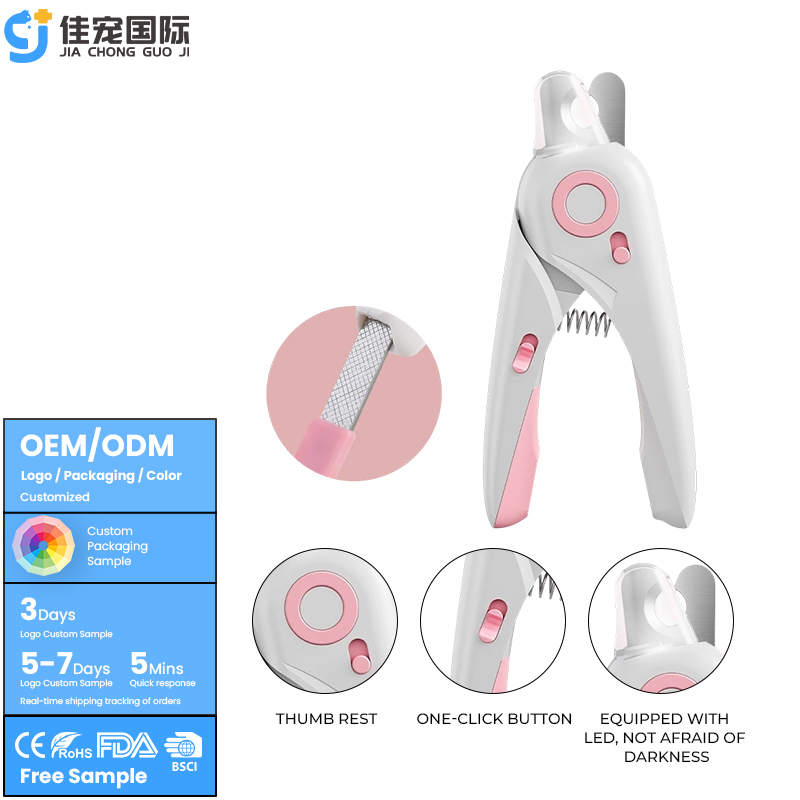 LED Pet Nail Clipper with Built-In File and Safety StopperA stainless steel and ABS clipper with LED light, transparent window, stopper, built-in file and automatic spring-loaded design to help avoid cutting the quick.View Product →
Materials, Coatings and Compliance
For the blade and jaw, 3Cr13 is the economical choice and 4Cr13 gives better corrosion resistance at a modest cost increase. Springs are typically 304 stainless. Handles combine ABS or PP with a TPR overmould for grip; recycled PP is available but changes the surface finish slightly.
- REACH SVHC: declare the full material list, including coatings and inks.
- RoHS and CE: required for LED and electric models, plus FCC for the US.
- Battery documentation: UN38.3 test summary and a shipping declaration for any lithium cell.
- Packaging rules: EU packaging regulation and Prop 65 labelling for coatings and printed cards.
Electric models add one more layer of decisions: motor torque, noise level, battery runtime and charging port placement. A combination tool that grinds and clips covers both nervous owners and professional groomers, but the electronics must be sealed against hair and dust ingress.
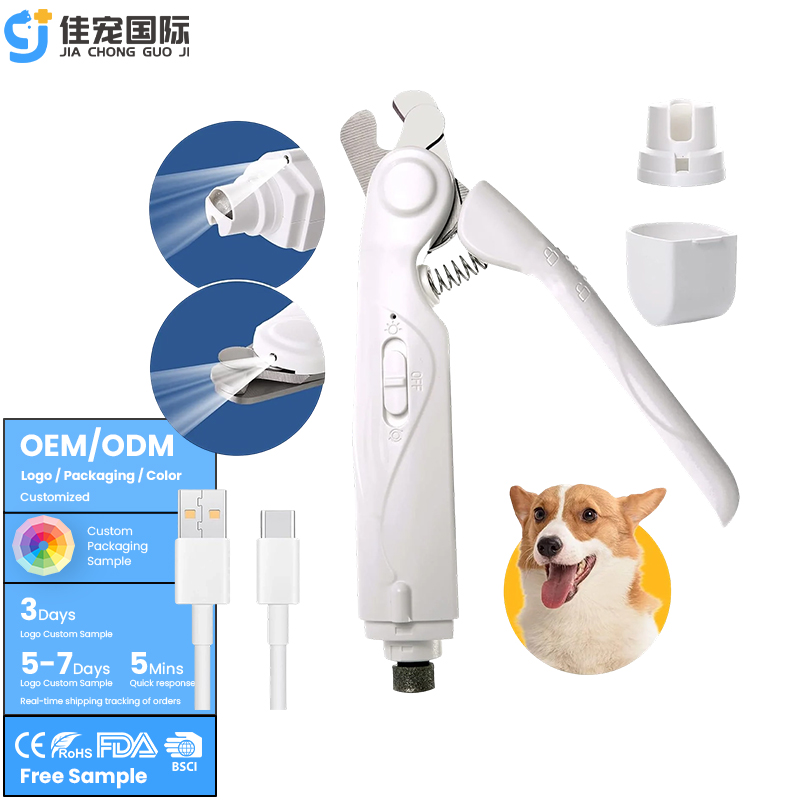 2 in 1 Electric Pet Nail Clipper with Built-In Grinding WheelA customizable ABS, stainless steel and ceramic grooming tool combining a cutting blade with a grinding wheel, plus LED light and transparent limiter window.View Product →
Where the Money Actually Sits
Tooling is the line item buyers focus on and the one that matters least per unit. On a typical first order, the cost mix looks roughly like this.
The practical implication is simple. If your annual volume stays under 5,000 pieces, pay for the tooling separately instead of letting it be amortised into a higher unit price. That keeps the mold ownership clear and leaves you free to move production later without renegotiating the whole price sheet.
From Sketch to Shipment: A Realistic Timeline
Add two weeks for packaging artwork approval and approval signatures, plus two to three weeks of sea freight to Europe or the US. Buyers who skip the pilot run usually discover the problem in the first container instead of at the sample stage, and fixing a blade angle after 10,000 units are packed is far more expensive than one extra week in the schedule.
Quality Checks Worth Writing Into the Purchase Order
- Incoming steel verification: hardness test on each blade batch, recorded by lot number.
- Sharpness test: 200 consecutive cuts on a 3 mm sisal cord, checking for burrs or rolled edges.
- Spring cycle test: 8,000 open-close actions with tension measured at the start and end.
- Salt spray: 24 hours on plated or coated metal parts, no red rust permitted.
- Assembly check: pivot screw torque and blade alignment, tested on the finished tool.
- Drop test: 1 metre onto a hard floor, five times, no cracks and no blade offset.
- Packaging and print: barcode scan, artwork version match, sealed blister or box integrity.
- Final inspection: AQL 2.5 for major defects and AQL 4.0 for minor cosmetic defects.
Procurement Risks and How to Avoid Them
- Unclear tooling ownership: state in the contract who owns the mold, who pays for maintenance, and how the mold is transferred if you switch suppliers.
- Unverified coating claims: a "titanium blade" claim without a substrate spec is a coating description, not a material one. Request the steel grade separately.
- Loosened tolerances after approval: the golden sample is your reference. Keep a signed copy on both sides and check the first shipment against it.
- MOQ traps: a low trial MOQ often comes with off-tool samples that were hand-finished. Confirm the price for the real production volume before signing.
- Battery shipping surprises: LED and electric clippers need battery documentation before freight booking, or the container does not move.
Frequently Asked Questions
What is the usual MOQ for an ODM pet nail clipper?
For a model that already exists in the factory's tooling, 2,000 to 5,000 pieces per colour is common. A new mold usually starts at 10,000 pieces. Mixed colours can often be combined to reach the MOQ, but each colour needs its own packaging run.
How long do samples take?
Seven to ten days for a sample pulled from existing tooling, and 20 to 25 days for an off-tool sample after the mold is cut. Approve a golden sample signed by both sides before mass production starts.
Can we get exclusivity on a design?
Yes, but it has to be in the contract. Exclusivity normally comes with a paid mold, a minimum annual volume, or a higher unit price. Without one of those three, most suppliers will sell the same platform to other buyers in different markets.
Do you provide test reports and certificates?
Blade hardness, spring cycle counts, salt spray results and REACH or RoHS declarations can all be included in the order. For LED and electric models, ask for CE, FCC and UN38.3 documentation before booking freight.
Next Step: Send the Clipper, Not Just the Specification
Ningbo Jia Chong has been building pet grooming tools since 2009, moving from general cleaning brushes to a dedicated pet product factory. Today the company runs a 10,000 sqm plant with 18 production lines, supported by 5 designers, 6 R&D engineers and 8 QC inspectors, and serves buyers in more than 40 countries through OEM and ODM programs.
If you have a target price, a reference sample or a competitor's product, that is enough to start. A quotation with tooling cost, unit price at three volume tiers and a realistic sample date usually comes back within two working days.
Before you commit, take a closer look at our factory and production lines to see how design, molding and final inspection are handled under one roof.

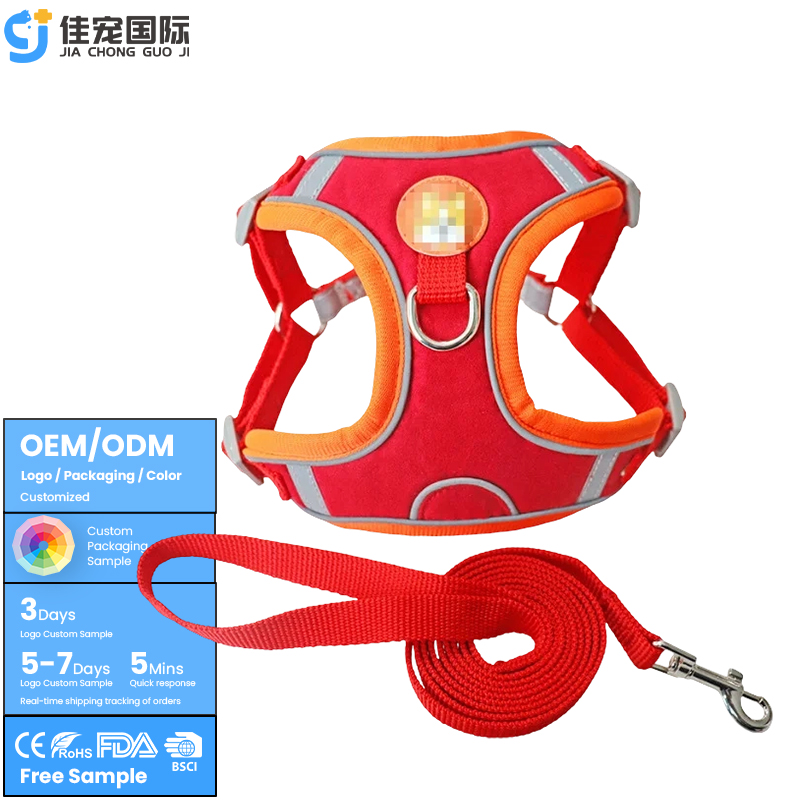
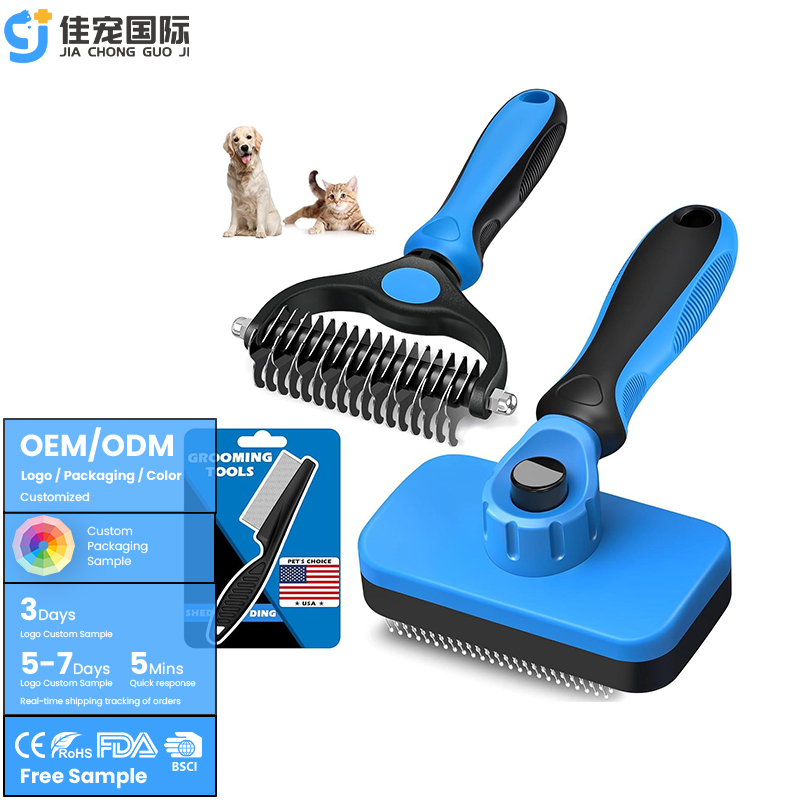

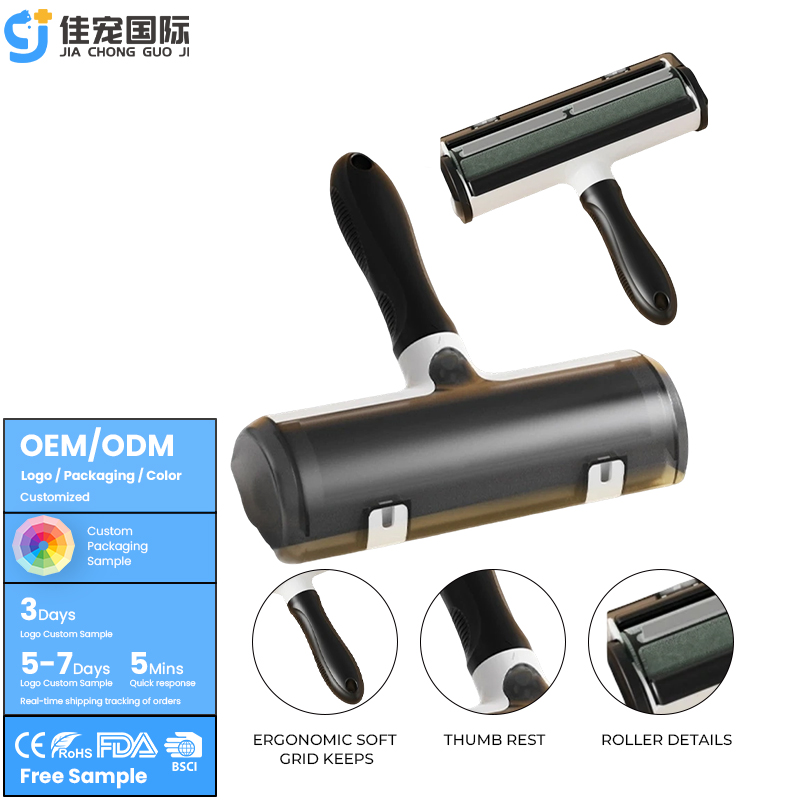
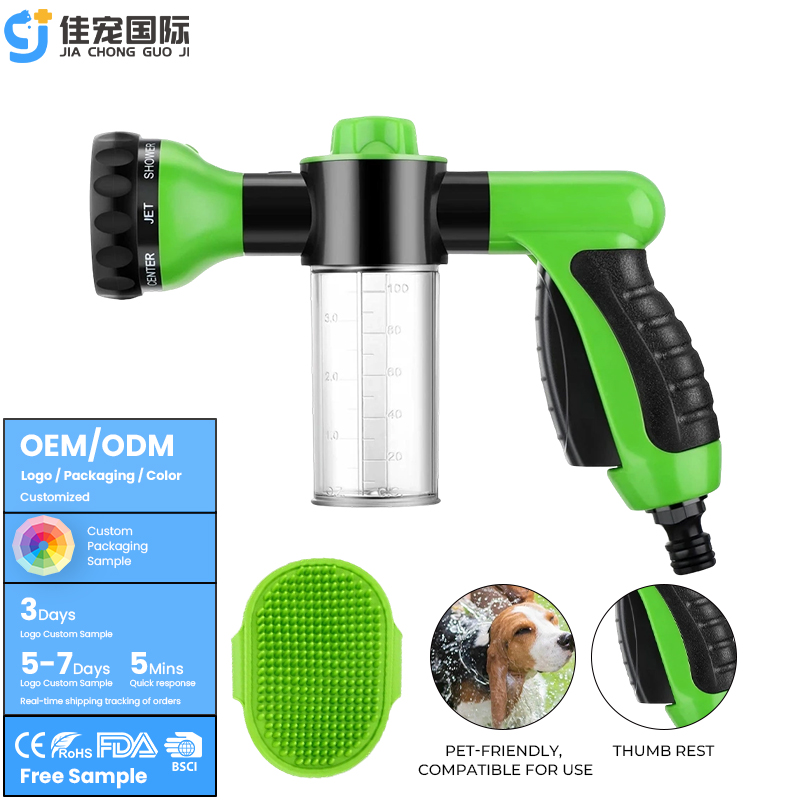




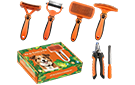

Since its founding in 2009, Jia Chong has devoted itself to the pet-care sector, with a “people-first, pet-embrace” philosophy, delivering professional, high-quality, full-line one-stop solutions for pet families worldwide.
-
 No. 90, Fengming Road, South District, Economic Open Zone, Yuyao City, Zhejiang Province, China
 -
 +86-152 5827 1677
-
 info@nbpetsfamily.com
Copyright © Ningbo Jia Chong International Trade Co., Ltd. All Rights Reserved. OEM/ODM Pet Accessories Manufacturer Pet Products Factory
