

 English
 русский
 Español
 Português
 عربى
عربى italiano
ODM Pet Hair Remover Sourcing Guide: Specs, MOQs, and Buyer Checklist for Importers
Content
- 1 What ODM Actually Covers on a Pet Hair Remover
- 2 The Formats Buyers Actually Order
- 3 Materials, Tolerances, and the Tests That Prove Them
- 4 What Real ODM Capability Looks Like in a Factory
- 5 Six Procurement Risks and How to Close Them
- 6 MOQ, Tooling, and Lead Time
- 7 Frequently Asked Questions
- 8 Next Step: A Short Sourcing Checklist
A buyer opens a sample carton and lines up two pet hair removers. Same shape, same blue, same retail box. One strips a sofa cushion in four passes; the other smears the same hair deeper into the weave. The gap between them is roughly three millimeters of blade pitch and 15 Shore A of silicone hardness, and neither number appears on the spec sheet the buyer was handed.
That is what an ODM pet hair remover purchase really is. You are not buying a molded handle and a roll of sticky sheets. You are buying the engineering decisions behind them, and your job during sourcing is to make those decisions explicit, measurable, and written down before the mold is cut.
Here is the short version before the detail: start from a proven remover platform, then spend your customization budget on the contact surface and the packaging. Paying for brand-new tooling before you know whether the format sells is the most reliable way to turn a six-dollar retail item into a fourteen-dollar one.
The rest of this guide covers the formats buyers actually order, the material and tolerance values worth writing into a specification, the tests that prove them, and the questions that separate a manufacturer from a trading office with a good photo library.
What ODM Actually Covers on a Pet Hair Remover
ODM and OEM are used interchangeably in pet accessory sourcing. They are different contracts with different risk profiles.
Under OEM, you supply the drawing and the factory builds to it. The design is yours, the tooling is usually yours, and the first article can take six to eight weeks to appear. Under ODM, the factory already owns a mature platform, such as a glove, a roller housing, or a comb body, and you modify it: pad hardness, bristle material, chamber geometry, handle length, color, and retail packaging.
The practical consequences matter more than the labels.
- Speed: an ODM sample run is typically 7 to 15 days. Cutting a new OEM mold adds 25 to 45 days before you hold anything in your hand.
- Cost: ODM amortizes tooling across existing molds, so you usually pay for modified inserts rather than a complete new mold.
- Exclusivity: by default there is none. You are buying faster market entry, not a protected design.
- Differentiation: it has to come from the contact surface and the packaging, because the silhouette is shared with other buyers.
Before signing, settle two points in writing: who owns the modifications developed for you, and whether the factory may sell the same configuration to another buyer in your sales territory.
| Dimension | OEM | ODM |
|---|---|---|
| Design source | Your drawings and 3D files | Supplier's existing platform |
| Tooling | New mold, paid by the buyer | Existing mold, modified inserts |
| First sample | 25 to 45 days | 7 to 15 days |
| Differentiation | High | Medium, driven by materials |
| Best fit | Validated demand, high volume | New SKU, niche surface, or channel test |
The Formats Buyers Actually Order
Five formats cover most of the category, and they are not interchangeable. Each one targets a different surface, a different retail price band, and a different repurchase pattern.
The split above is an illustrative planning mix rather than measured market data, but it tracks how inquiries cluster: fabric tools for furniture and bedding carry the volume, while on-pet combs and brushes sit closer to grooming.
For upholstery and bedding, a five-finger glove is the easiest format to adapt, because pad density and strap fit do most of the differentiation work.
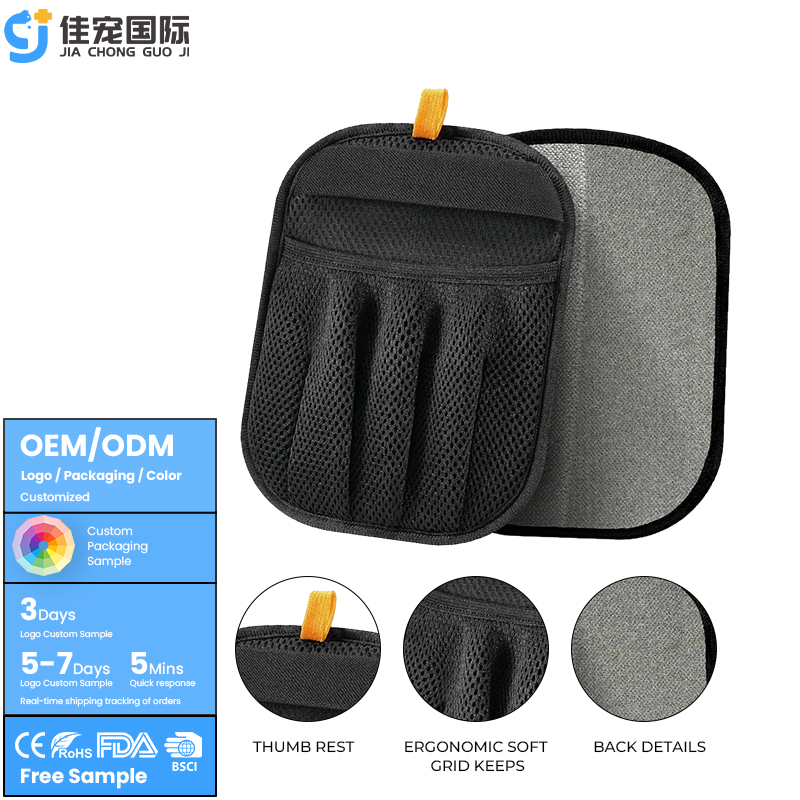 Five-finger Pet Hair Removal Glove1. One side features a brush cloth that efficiently absorbs hair, while the other side has a breathable and comfortable mesh fabric.View Product →
For carpets and pet beds, a reusable roller with a sealed dust chamber holds more hair per pass and removes the consumable question from your pricing model entirely.
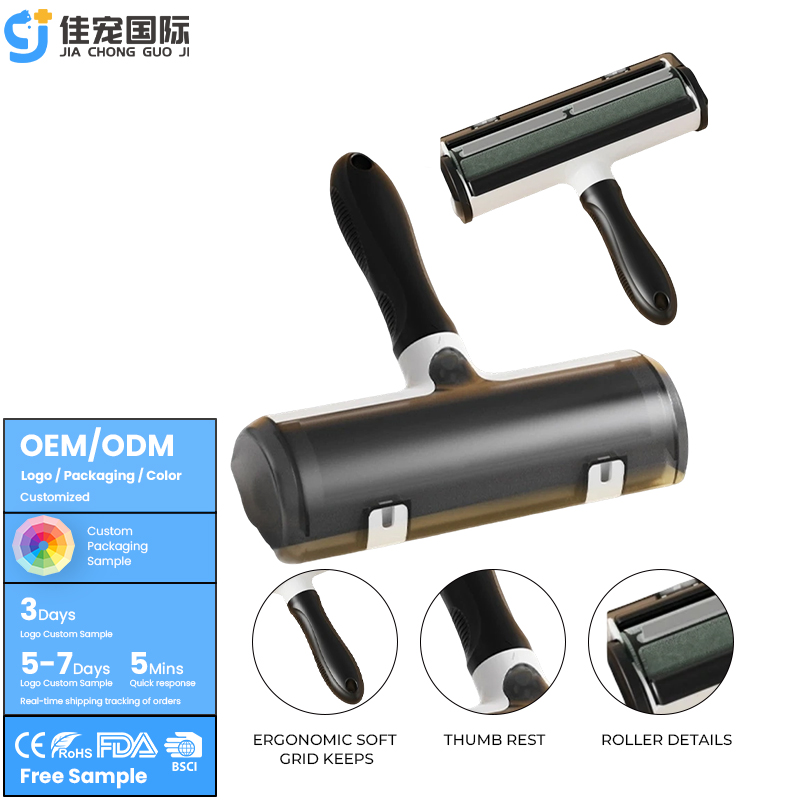 Pet Hair Removal Roller1. Detachable handle, compact product packaging, reduced logistics costs.View Product →
For apparel, car interiors, and impulse retail, a compact lint roller with replaceable sheets keeps customers returning for refills.
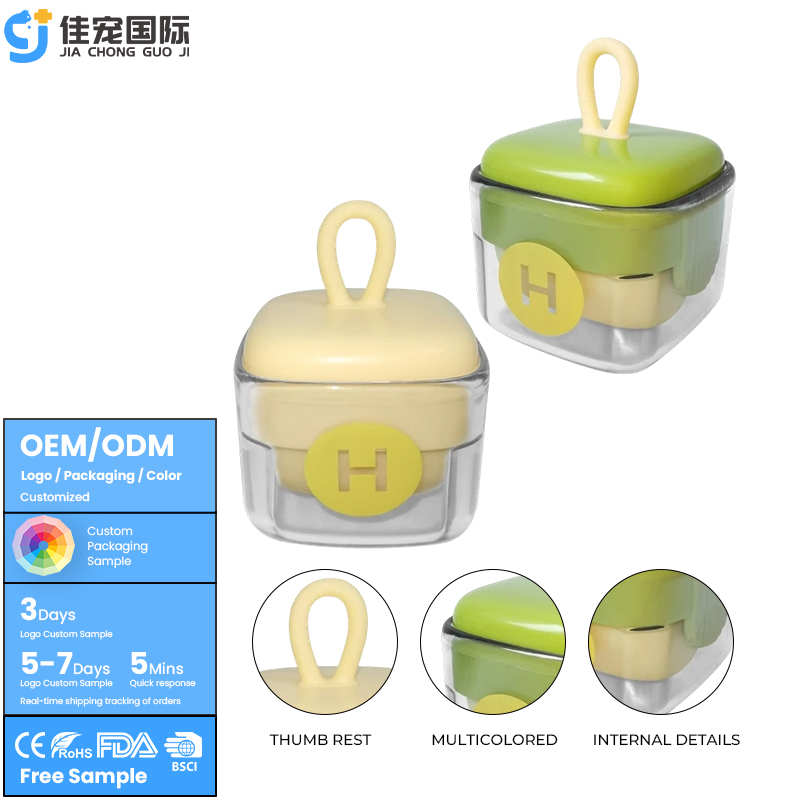 Portable Lint Roller1. Compact size, easy to carry in a bag or pocket.View Product →
| Format | Primary surface | Standard build | ODM variables | Typical failure mode |
|---|---|---|---|---|
| Five-finger glove | Sofas, bedding, car seats | Silicone or TPR palm pads on a fabric strap | Pad hardness, pad count, strap elasticity | Tips flatten and lose grip |
| Reusable roller | Carpet, upholstery, pet beds | ABS housing, bidirectional roller, dust chamber | Bristle material, chamber seal, handle length | Chamber jams; bristles bend |
| Lint roller | Clothing, car interiors | Handle plus replaceable sheet core | Sheet tack level, sheet count, core diameter | Tack drops in humid storage |
| Deshedding comb | On-pet coat | Steel blade row with molded handle | Blade pitch, blade count, tip finishing | Unfinished tips scratch skin |
| Massage brush | Short coats, bath time | Soft pins or silicone nubs on a flexible base | Pin length, base flex, drainage holes | Pins pull hair instead of collecting it |
Materials, Tolerances, and the Tests That Prove Them
A remover that works in a showroom video can fail in a living room within a month. The difference is usually measurable, which means it belongs in your specification rather than in a conversation.
Values worth writing into the spec
- Silicone pad hardness: 40 to 60 Shore A. Softer collects more fine hair; harder lasts longer but skips short fibers.
- Housing material: ABS or PP with 1.8 to 2.5 mm wall thickness. Thinner walls flex in the hand and read as cheap at retail.
- Blade stock: 304 stainless at 0.6 to 0.8 mm thickness with a rounded tip radius, if the tool touches skin.
- Adhesive tack: roughly 8 to 14 N per 25 mm width. Above that it lifts fabric fibers; below it lifts nothing.
- Molded-part tolerance: plus or minus 0.2 mm on critical fits, and roller concentricity within 0.5 mm to stop wobble.
- Color consistency: Delta E of 1.5 or lower between production batches, especially for pastel and white goods.
Tests that cost little and prevent recalls
- Abrasion: 5,000 reciprocal strokes on felt, measuring retained hair pickup at intervals.
- Pull test: 120 N static load for 30 seconds on straps, wrist bands, and handle joints.
- Drop test: 1.2 m onto tile across six faces, with no functional damage afterward.
- Corrosion: 48 to 72 hours of neutral salt spray on any metal part marketed as rust resistant.
- Compliance: RoHS, REACH SVHC below 0.1 percent, phthalates, PAHs, and California Prop 65 documentation if you ship to the United States.
Why material choice outlasts shape
Buyers often assume performance fades for every remover at the same rate. It does not, and the difference shows up in return rates rather than in the first sample review.
Illustrative curves based on typical lab abrasion results, not measured field data. The pattern holds in practice: mechanical surfaces keep working, while adhesive surfaces decline as they load up with dust and lose tack. If you sell the adhesive format, plan refills as part of the product, not as an afterthought.
What Real ODM Capability Looks Like in a Factory
An ODM partner needs design staff, not just assembly lines. Otherwise your "customization" ends at a color chip and a printed logo.
A working example is Ningbo Jia Chong International Trade Co., Ltd., which started in 2009 producing cleaning and beauty brushes for people and infants, then shifted toward pet care. The company reports a 10,000 square meter plant with 18 production lines and close to 200 employees, including 5 designers, 6 R and D engineers, and 8 quality inspectors. A dedicated pet products branch factory was set up in 2022, and a separate trading company took over pet product import and export in 2024. Customers are said to span more than 40 countries.
That structure matters for a remover project in three ways.
- Design capacity in house means pad geometry and housing changes can be modeled without outsourcing, which shortens revision loops.
- Dedicated QC staffing means inspection happens at defined checkpoints instead of only before shipment.
- Separate manufacturing and trading entities usually mean the factory has its own production schedule, not a broker's.
Buyers who want to see the plant layout, line count, and team breakdown before booking a sample run can review the factory profile first, then verify with a live or recorded video walkthrough of the specific line that would run their order.
Three questions reveal the difference quickly: Who owns the mold for the platform you are adapting? Which engineer signs off on a tolerance change? How many inspection staff handle a batch of your size on the day it runs?
Six Procurement Risks and How to Close Them
- Tooling ownership is vague. If the platform mold belongs to the factory, you may pay for modifications you cannot take elsewhere. Ask for the amendment scope in writing.
- Wear testing never happened. A sample that works on day one tells you nothing about month three. Require an abrasion result at an agreed stroke count.
- Silicone hardness drifts. Two batches can both be "soft" and still feel different. Fix a Shore A range and a test method.
- Packaging claims outrun the product. Phrases such as reusable forever or fully eco-friendly invite complaints. Match every claim to a test report or drop it.
- MOQ and price breaks fight your launch plan. A 5,000-piece tier looks efficient until half of it sits in a warehouse for a year.
- Mold maintenance is unpriced. Ask who pays for repairs and how long a repair stops production before the first order ships.
MOQ, Tooling, and Lead Time
Most first orders are smaller than buyers expect, because platform adaptation reuses existing tooling. The chart below shows typical stage durations for an ODM pet hair remover project.
| Order path | Typical MOQ | Tooling | First delivery |
|---|---|---|---|
| Logo and color only | 500 to 1,000 pieces | None | 20 to 30 days |
| Platform adaptation: new inserts, materials, packaging | 1,000 to 3,000 pieces | Low, sometimes waived | 30 to 45 days |
| Full ODM development | 3,000 pieces and up | Paid separately | 60 to 90 days |
Treat every figure as a starting point for negotiation, and confirm the unit price drivers before you commit: silicone weight, bristle count, blade material, strap construction, and carton grade.
Frequently Asked Questions
Is an ODM pet hair remover exclusive to my brand?
Not by default. Exclusivity is a separate agreement, usually tied to volume or a term. If the silhouette cannot be exclusive, make your version distinctive through pad hardness, color, and packaging instead.
How much should a custom modification cost?
Modified inserts and new packaging artwork are normally the cheap part. A fully new mold is the expensive item and should only be approved once you have retail feedback on the format.
What is a sensible first order quantity?
Enough to cover two to three months of sales, not enough to fill a container. Many buyers start between 1,000 and 3,000 pieces for an adapted platform and scale after the return rate settles.
Which material is safest around pets?
Look for silicone or TPR that is free of phthalates and heavy metals, with documentation behind the claim. Sharp steel tips should be rounded and deburred, even on grooming combs.
How do I verify claims like reusable or rust resistant?
Ask for the test method, the sample size, and the pass threshold, then repeat the test on your production sample. A supplier who cannot describe the method has not run the test.
Next Step: A Short Sourcing Checklist
- Choose a format based on the surface your customer cleans most, not on the lowest unit price.
- Fix hardness, blade pitch, tack level, and tolerances in a written specification.
- Require abrasion, pull, and drop test results on the production sample, not a golden sample.
- Confirm tooling ownership, exclusivity terms, and mold maintenance responsibility.
- Order a pilot quantity, measure returns for one season, then scale.
Get those five steps right and the two removers in that sample carton will perform the same way in your customer's living room. Send your target retail price, the surface you are targeting, and your packaging direction through the contact form, and ask for a paired sample so you can compare materials side by side before committing to a production run.
related products
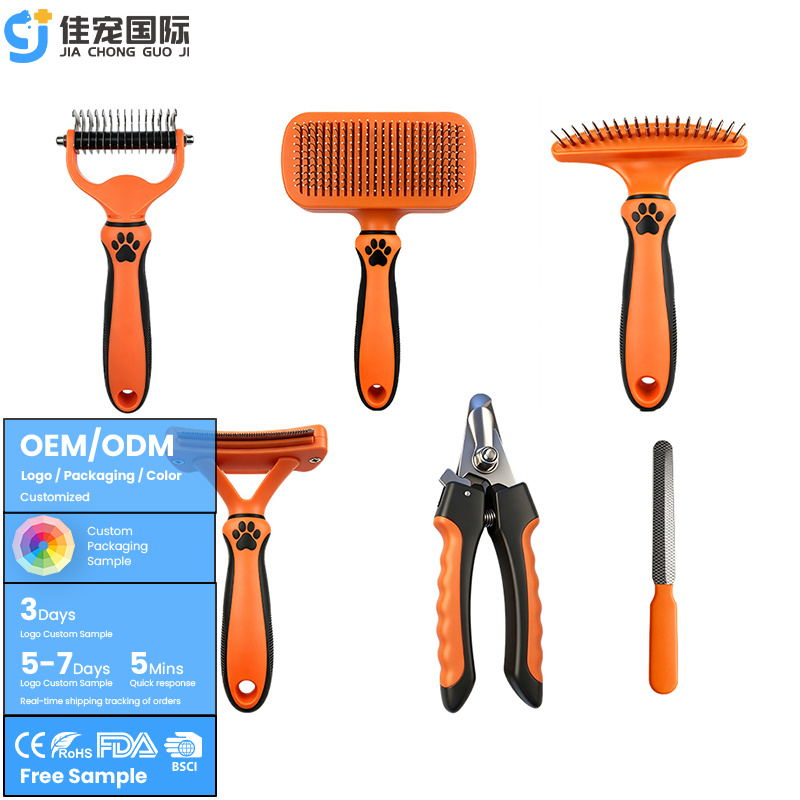






Since its founding in 2009, Jia Chong has devoted itself to the pet-care sector, with a “people-first, pet-embrace” philosophy, delivering professional, high-quality, full-line one-stop solutions for pet families worldwide.
-
 No. 90, Fengming Road, South District, Economic Open Zone, Yuyao City, Zhejiang Province, China
 -
 +86-152 5827 1677
-
 info@nbpetsfamily.com
Copyright © Ningbo Jia Chong International Trade Co., Ltd. All Rights Reserved. OEM/ODM Pet Accessories Manufacturer Pet Products Factory
