

 English
 русский
 Español
 Português
 عربى
 italiano

How to Audit a Pet Product Factory in China: A Practical Buyer's Checklist
Content
- 1 Start With the Order, Not a Generic Checklist
- 2 Verify the Legal Entity and the Actual Production Site
- 3 Walk One Product Through the Real Process
- 4 Check Quality Where Pet-Product Defects Actually Appear
- 5 Prove Capacity, Tooling Control, and Sample Discipline
- 6 Audit Product Categories Separately
- 7 Use Remote Evidence Without Pretending It Is the Same as Being There
- 8 Turn Findings Into a Supplier Decision
- 9 Frequently Asked Questions
Picture the moment when a sample looks right, the quote is 9% below your target, and the supplier answers every message within an hour. That is exactly when an audit should slow the order down. A polished sample and fast sales replies are not evidence that a factory can repeat the result across a production lot.
The practical conclusion is simple: a pet product factory audit in China should produce a go, conditional go, or no-go decision based on four evidence chains — who the legal entity really is, how your specific product moves through the site, whether quality and safety records match the product risk, and whether commercial terms make the promises enforceable. A factory tour is not an audit. A finished-goods inspection is not a factory audit either.
Start With the Order, Not a Generic Checklist
Before you book a visit or request documents, write a one-page audit brief around the order you may place. Define the SKU, annual volume, first-order quantity, target market, packaging format, claims, expected lead time, and any known safety concerns. The same factory can look strong for a grooming brush and weak for a smart feeder because the process, testing, and component supply base are different.
Use the brief to decide the audit depth. A low-value order of silicone bowls may need a document review, a site walk, and pre-shipment checks. A chew toy, retractable leash, automatic litter box, or pet carrier deserves more attention because failure can injure an animal, damage a home, or create a recall. If the supplier cannot explain which production line, subcontractor, or material lot will be used, the audit has no fixed target.
Ask for the factory’s own process flow for the SKU, not a generic brochure flow. Then compare that flow with what you see on site. The gap between the two is often more useful than the answer itself.
Verify the Legal Entity and the Actual Production Site
Check the Chinese business license, the unified social credit code, registered address, business scope, and import-export rights. Match those details against the quotation, proforma invoice, bank account, product certificates, and the name on the building. A trading company can be a legitimate partner, but you need to know whether it owns the production site or sources from one. If a third-party factory is involved, identify it before you approve the sample.
Ask for the legal entity, site map, and a current factory profile before the visit; a profile can frame the discussion, but it is not evidence. Scale is useful context: a 10,000 sqm plant with 18 lines, nearly 200 staff, five designers, six R&D engineers, and eight QC inspectors gives you more places to look. It does not, by itself, prove that your order will be controlled.
On site, confirm the manufacturing address, not just the office. Walk the raw-material store, production floor, WIP area, QC station, tool room, packing area, and finished-goods warehouse. Look for separate areas for quarantined goods, rejected material, and rework. In pet products, hair, dust, odor, and cross-contamination between materials deserve the same attention as machine condition. If the site is a trading office with a showroom, say so in the report and adjust the decision.
Walk One Product Through the Real Process
Pick one representative SKU and follow it from incoming material to sealed carton. Ask to see the current work order, bill of materials, material lot records, in-process inspection sheets, and packing list. At each station, ask what the operator checks, what happens when a defect appears, and where the nonconforming item goes. Record the route in photos and notes, then compare it with the supplier’s written process.
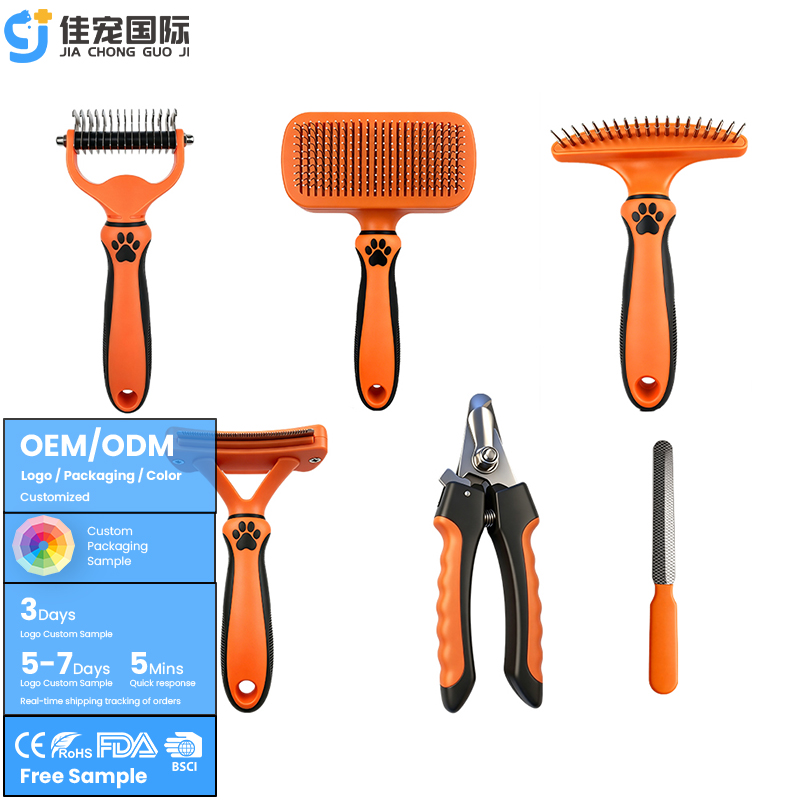
For a multi-component order such as a 10-in-1 grooming kit, the audit trail should connect every brush, comb, nail tool, and pouch to an incoming lot, an assembly station, an in-line check, and a packing list.
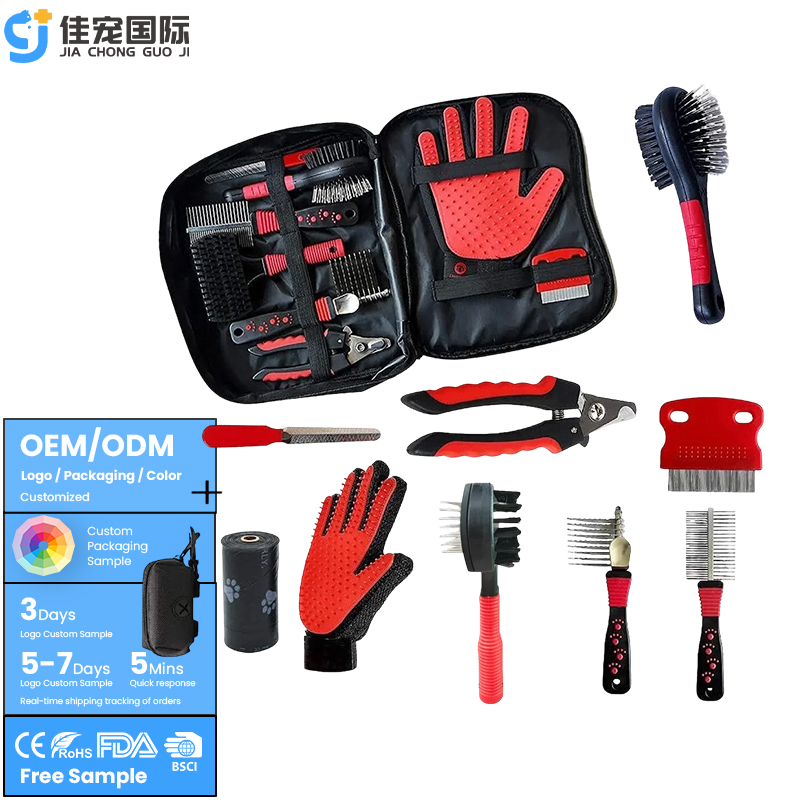 10-in-1 Pet Grooming Kit with Carrying BagMulti-tool pet grooming kit with stainless-steel combs, nail tools, and carrying bag; its many components make lot-to-packing traceability worth checking.View Product →
Watch for weak handoffs between stations. A common failure is not a broken machine but an unclear transfer point: loose parts sit in an unlabeled bin, a rework tray has no date, or the packing line relies on a visual count. These details matter more when the product has small accessories, multiple colors, or a retail-ready package. Ask how the factory prevents mixed SKUs, missing pieces, and outdated labels.
Check Quality Where Pet-Product Defects Actually Appear
Audit the quality system by risk area, not by the thickness of the manual. Ask who performs incoming inspection, in-process checks, final inspection, and laboratory testing. Review calibration records, test-report scope, sample dates, and the link between a failed test and a corrective action. A certificate on the wall is less useful than a record that shows what happened to a specific lot.
| Risk area | Evidence to request | Weak answer |
|---|---|---|
| Load-bearing products such as harnesses, leashes, and carriers | Dynamic load test records, webbing and stitch specification, buckle cycle checks, batch traceability | “Strong enough” with no test sample or record |
| Chew-risk toys, plush items, and grooming handles | Small-parts checks, seam pull records, sharp-edge inspection, material declaration | A generic certificate that does not name the SKU |
| Food- and water-contact bowls, bottles, and fountains | Food-contact grade declaration, migration test for the target market, resin lot records | “BPA free” without a report or test method |
| Electrical and battery products such as smart feeders and litter boxes | Hi-pot and leakage checks, battery transport documents, leak test logs, firmware version control | One safety certificate reused for every model |
| Hygiene-sensitive bags, kits, and packed accessories | Thickness or seal-strength checks, cleanliness checks, packing-line inspection records | Visual inspection only, with no measured result |
A 65L automatic litter box adds electrical, leak, sensor, and firmware risks to the same factory audit. Ask for the exact model test record, not only a platform certificate.
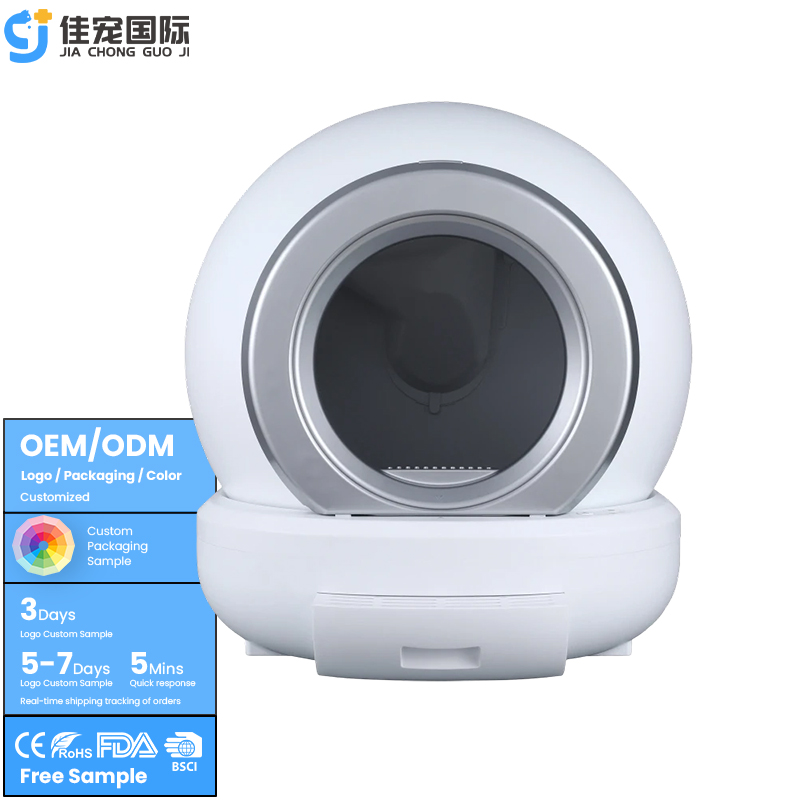 65L Automatic Cat Litter Box with App ControlApp-connected automatic litter box with 65L capacity and radar, gravity, and infrared safety sensors; sensor and leak risks merit close review.View Product →
Set critical, major, and minor defect definitions before production. Critical defects should cover animal harm, electrical shock, leakage, sharp edges, and missing traceability. Major defects should cover failure in normal use. Minor defects should not be used to hide a safety issue.
Prove Capacity, Tooling Control, and Sample Discipline
Do the capacity arithmetic. Ask how many lines will run your order, how many shifts, what cycle time the factory accepts, and what yield it plans. Eighteen lines do not mean eighteen lines are available; they may be dedicated to other customers, idle, or limited by a bottleneck in packing. Compare the claimed monthly output with your first-order and replenishment schedule.
Tooling is a common blind spot. Confirm who owns molds, fixtures, and test equipment, where the ownership is documented, and what happens if the relationship ends. Check mold storage, maintenance logs, and change-control records. For sampling, ask for a golden sample signed by both sides, a sample approval record, and a clear rule for material or component substitutions. A sample made by an engineer is not the same as a production sample made by the line.
Finally, review packaging and labeling control. Ask how the factory checks barcodes, warnings, language versions, and carton marks. Packaging errors create retail chargebacks and can make a safe product unsellable.
Audit Product Categories Separately
Pet products are not one quality category. Grooming tools need edge control, coating durability, and moving-part checks. Waste bags need thickness, seal strength, and honest claim support. Bowls and bottles need food-contact evidence. Leashes and harnesses need load and stitch testing. Smart devices need electrical safety, battery control, water resistance, and software version discipline. Carriers need latch cycling, ventilation, load and drop checks, and handle strength.
A carrier or air box is a load-bearing and ventilation product, not a bag with a handle; the audit should include latch cycling, drop and load tests, and vent dimensions.
 Ventilated Pet Air Box Carrier for Small to Medium PetsPP-and-iron pet carrier with skylight, multiple vents, and dual handles; load-bearing and latch performance are key checks for transport use.View Product →
Do not accept one broad quality certificate as proof for every SKU in the catalog. Map each certificate to a model, a test standard, a report date, and the market where you intend to sell. If the factory cannot show that link, place the gap in the audit report rather than assuming the document covers your order.
Use Remote Evidence Without Pretending It Is the Same as Being There
A remote audit can be useful when travel is impractical, but it needs a stricter protocol. Ask for an unedited live video walk with a timestamp, a view of the site address, line signs, machine labels, WIP tags, calibration stickers, and current inspection sheets. Have the supplier screen-share the work order and quality records during the call. Keep a written request list before the call so answers can be verified rather than improvised.
Remote evidence is good for document checks, process flow, and some visual controls. It is weaker for smell, noise, housekeeping, worker interviews, and physical sample handling. If the order is safety-critical or the supplier is new, add a third-party site audit or an on-site visit before mass production.
Turn Findings Into a Supplier Decision
Score the audit against the order brief, not against a perfect factory standard. Use three outcomes. Go means the evidence is consistent, the critical controls are present, and the open items are minor. Conditional go means production can start only after named corrective actions, a revised sample, or a pre-production meeting. No-go means a disqualifier remains unresolved.
Treat legal-entity mismatch, hidden subcontracting, falsified records, missing safety tests, and no traceability as disqualifiers until proven otherwise. Put the conditions into the purchase order: sample approval, tooling ownership, critical defect definitions, inspection hold points, corrective-action deadlines, and payment release tied to evidence. A quote should follow the audit scope, not replace it; you can send the brief through the contact page when requesting pricing.
Frequently Asked Questions
What is the difference between a factory audit and a product inspection?
A factory audit reviews the supplier, site, systems, records, and capability. A product inspection checks finished goods against your specification. They answer different questions, and one should not be used as a substitute for the other.
Can a video call replace an on-site factory audit?
It can support a decision, especially for a repeat supplier with a clear history. It cannot fully replace physical observation, sample handling, and private worker interviews. For a new or high-risk supplier, use remote checks as a first filter, not the final proof.
What are the most common red flags?
The quote, invoice, and business license name do not match; the production address is undisclosed; certificates do not name the SKU; test reports are outdated or outside the target market; rejected goods are mixed with good stock; and the factory cannot show a lot-to-carton trace.
How long should an audit take?
A focused site audit usually takes one to three days depending on the product range and whether a laboratory or warehouse review is included. Remote document review may take a few hours, but allow time for follow-up evidence and sample testing.
Bring the audit back to your order. The best outcome is not a long report; it is a short list of verified facts, unresolved risks, and conditions you can put into a purchase order. If a supplier cannot connect its legal entity, production line, quality records, and your SKU, a low price is not a bargain. It is an unpriced risk.
related products







Since its founding in 2009, Jia Chong has devoted itself to the pet-care sector, with a “people-first, pet-embrace” philosophy, delivering professional, high-quality, full-line one-stop solutions for pet families worldwide.
-
 No. 90, Fengming Road, South District, Economic Open Zone, Yuyao City, Zhejiang Province, China
-
 +86-152 5827 1677
-
 info@nbpetsfamily.com
Copyright © Ningbo Jia Chong International Trade Co., Ltd. All Rights Reserved. OEM/ODM Pet Accessories Manufacturer Pet Products Factory
