

 English
 русский
 Español
 Português
 عربى
عربى italiano
Custom Cat Litter Box Guide: Size, Materials, and Smart Features for Your Feline
Content
Finding a litter box that fits your cat perfectly feels like a hunt. The standard trays from big-box stores often fall short—too small for a large Maine Coon, too shallow for a deep digger, or simply too ugly to keep in a living room. You might have searched online for a custom-made stainless steel sifting box only to find that even the largest options are still too cramped. The real solution isn’t about cutting corners yourself; it’s about understanding what “custom” truly means for your cat’s health and your home.
The Size Factor: Why Most Litter Boxes Are Too Small
The most common complaint from cat owners is that their litter box is not big enough. A box that is too cramped can lead to accidents outside the box, stress, and even urinary tract issues. The general rule is that the box should be one and a half times the length of your cat from nose to base of tail, and wide enough for them to turn around comfortably.
Customizing the size is the most impactful change you can make. When we look at production capabilities, the ability to scale up dimensions is a primary benefit of choosing a manufacturer that offers OEM/ODM services. Rather than modifying a plastic tote with a utility knife, you can specify the exact width, depth, and height to accommodate your cat's unique requirements. A deeper box is crucial for cats that like to dig to the bottom, while a lower front entry is essential for senior or arthritic felines.
The table below outlines how different dimensions address specific cat needs.
| Cat Type / Need | Minimum Box Length | Minimum Box Width | Recommended Wall Height |
|---|---|---|---|
| Average Domestic Cat | 20 inches (50 cm) | 15 inches (38 cm) | 6-8 inches (15-20 cm) |
| Large Breed (Maine Coon) | 24 inches (61 cm) | 18 inches (46 cm) | 8-10 inches (20-25 cm) |
| Deep Digger (High sides) | 22 inches (56 cm) | 16 inches (41 cm) | 10-12 inches (25-30 cm) |
| Senior or Arthritic Cat | 20 inches (50 cm) | 15 inches (38 cm) | 4-6 inches (10-15 cm) with low entry |
As the data shows, customizing the wall height is critical. While many off-the-shelf boxes offer one standard height, a custom solution allows you to combine high walls for containment with a low cut-out for easy access. This is the most practical way to solve the problem of litter scatter.
Choosing the Right Material for Your Custom Box
Material choice isn't just about looks; it directly affects odor control, ease of cleaning, and durability. The three main contenders are plastic, stainless steel, and acrylic.
Plastic (Polypropylene or HDPE)
Plastic is lightweight and affordable, but it can absorb odors over time and is easily scratched. Scratches create hiding places for bacteria and make the box harder to sanitize. For a custom box, plastic is the least durable option unless you opt for a very high-grade, thick-walled plastic designed for commercial use.
Stainless Steel
Stainless steel is the superior choice for many cat owners. It is non-porous, meaning it won't absorb odors or stain. It is also extremely durable and easy to clean, often being dishwasher-safe. The main challenge is finding one that is large enough. A custom stainless steel box solves this problem directly. Many owners report that switching to stainless steel eliminated lingering urine smells entirely.
Acrylic or Polycarbonate
Clear acrylic boxes offer visibility, which some cats find reassuring. They are also non-porous and can look sleek in a modern home. However, they can be more brittle than stainless steel and are prone to scratching if not handled carefully.
A custom box allows you to combine materials. For example, you could request a stainless steel base for easy cleaning with a clear acrylic hood for cats that prefer a covered space. This hybrid approach is difficult to find in standard retail products.
Smart Features: Beyond the Basic Box
The definition of a “custom” litter box has evolved with technology. It no longer just means a specific size or color; it can also include integrated smart capabilities. For businesses looking to offer a premium product, combining custom dimensions with an automatic cleaning system is a major selling point.
A custom bulk order of automatic litter boxes can be tailored to specific market needs. For instance, you might want a larger capacity drum for multi-cat households or an enclosed design to minimize dust. The ability to request a specific litter type compatibility (clumping vs. crystal) is another level of customization that significantly improves the user experience.
Considering the expanding product line in the pet care sector, integrating a custom cat litter box with a broader ecosystem of products—like smart feeders or air purifiers—is a logical next step. For example, our 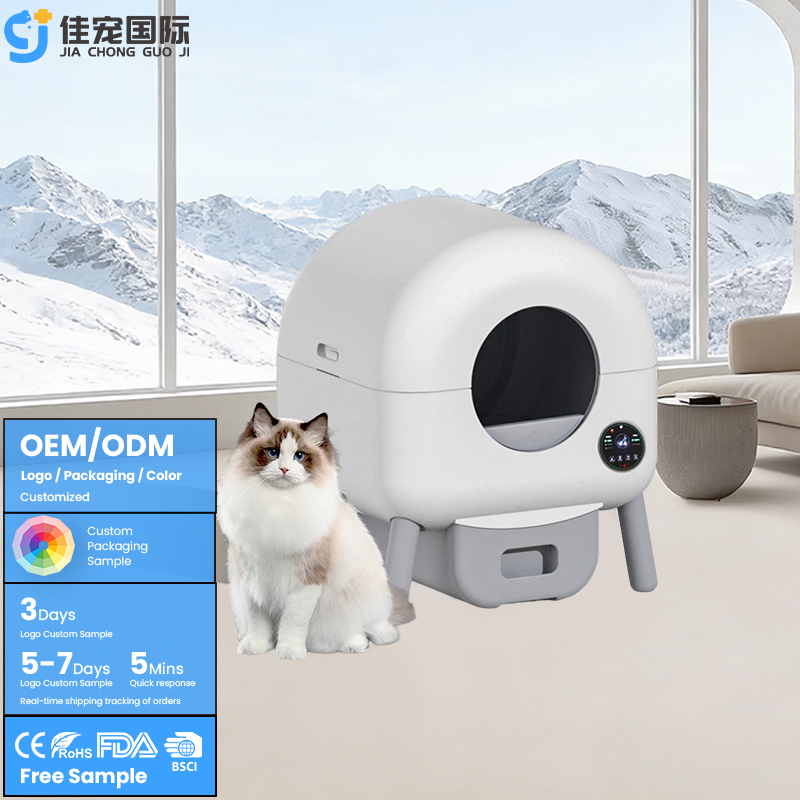 76L Automatic Self-Cleaning Cat Litter Box with Smart FeaturesWith a 76-liter capacity, this automatic litter box solves the common issue of standard boxes being too small for larger cats or multiple felines. Its self-cleaning function, smart app control, and anti-pinch safety make it a practical, hands-free solution that integrates well with smart home ecosystems.View Product → offers a 76-liter capacity, which directly addresses the common complaint of standard boxes being too small. This large format, combined with automatic self-cleaning, provides a practical, hands-free solution that works for larger cats or multiple felines, without requiring you to build a DIY enclosure.
Space Efficiency and Integration
One of the driving forces behind the search for custom litter boxes is the desire to integrate them into furniture. A custom box can be designed specifically to fit inside an existing cabinet, closet, or a piece of custom furniture. This is where exact external dimensions matter just as much as internal space.
When planning a custom box for a built-in enclosure, consider the following:
- Ventilation: Ensure the design allows for proper airflow to prevent moisture buildup and ammonia fumes. Including a port for a small exhaust fan is a smart addition.
- Access: A front- or side-entry design is easier to integrate into cabinetry than a top-entry one.
- Drawer Systems: A custom box can be designed as a pull-out drawer, making it easier to clean without moving the entire enclosure.
By specifying these parameters, you avoid the hassle of cutting into a purchased box and ending up with rough, sharp edges that are difficult to clean. A factory-made custom piece will have smooth, sealed edges and a uniform finish.
Frequently Asked Questions About Custom Litter Boxes
Can I just cut a hole in a standard storage tote?
Yes, but the results are often unsatisfactory. The edges can be sharp, the plastic may crack, and the tote’s thickness is usually not designed for daily scooping. A manufactured custom box will have stronger walls and finished, safe edges.
How often should I replace a plastic custom box?
Even a custom plastic box should be replaced every 1-2 years as it will develop micro-scratches that harbor odors. Stainless steel or acrylic boxes can last much longer, potentially for the life of the cat.
Is a custom box worth it for odor control?
Absolutely. The primary cause of lingering odor is a porous material (plastic) or an inadequate seal. A custom box made from non-porous stainless steel with a proper rim design can reduce odors dramatically compared to a standard plastic pan.






Since its founding in 2009, Jia Chong has devoted itself to the pet-care sector, with a “people-first, pet-embrace” philosophy, delivering professional, high-quality, full-line one-stop solutions for pet families worldwide.
-
 No. 90, Fengming Road, South District, Economic Open Zone, Yuyao City, Zhejiang Province, China
 -
 +86-152 5827 1677
-
 info@nbpetsfamily.com
Copyright © Ningbo Jia Chong International Trade Co., Ltd. All Rights Reserved. OEM/ODM Pet Accessories Manufacturer Pet Products Factory
