

 English
 русский
 Español
 Português
 عربى
عربى italiano
China Pet Nail Clipper Sourcing Guide: Types, Quality Checks & OEM Tips
Content
- 1 Why China Pet Nail Clipper Sourcing Works
- 2 Four Pet Nail Clipper Types You Need to Know
- 3 Quality Indicators That Decide Whether a Clipper Sells or Comes Back
- 4 Private Label and OEM/ODM: What a Good Factory Should Handle
- 5 A Practical Checklist for Shortlisting a China Supplier
- 6 Frequently Asked Questions About Pet Nail Clipper Sourcing
Twice a month, the same scene repeats in millions of living rooms: the dog spots the nail clipper and pulls a paw away. Overgrown nails click on hard floors, snag on upholstery and, in severe cases, curl inward until they press into the paw pad and force the dog to change its gait. For a family, a reliable nail clipper is a small tool that prevents a recurring problem. For importers, retailers and private-label brands, the stakes are higher: choosing the wrong China pet nail clipper supplier can mean rusted blades, broken springs and refund requests. This guide covers the types, quality criteria and sourcing checks that separate a dependable factory from a cheap one.
Why China Pet Nail Clipper Sourcing Works
China’s pet grooming supply chain did not emerge in a single cycle. It grew from decades of brush making, metal stamping and injection molding for the cosmetics and household cleaning industries. For a buyer, that history shows up in mature tooling, predictable lead times and component prices that are difficult to match elsewhere. That is why most private-label pet nail clippers in North American and European retail come from Chinese factories.
Ningbo Jia Chong International Trade Co., Ltd. is a representative example. The company began in 2009 manufacturing brushes and personal care tools, then expanded into pet grooming as demand grew. Its production facility now covers 10,000 square meters and runs 18 production lines, with a dedicated pet product plant added in 2022. The customer base spans more than 40 countries, which reflects the export discipline required for compliance documentation, packaging and logistics. That background matters because a nail clipper is a precision assembly: blade alignment, spring tension and handle fit are habits a factory either learns through years of production or struggles to replicate. A quick look at the factory overview gives a sense of the equipment and quality-control stations behind this process.
Four Pet Nail Clipper Types You Need to Know
There is no universal nail clipper. The right design for a product line depends on the dog’s size, the nail color and how confident the owner feels. These four configurations cover nearly every export order in the category.
| Type | Best suited for | How it works | Key caution |
|---|---|---|---|
| Guillotine | Small to medium dogs, cats | The nail slides through a rectangular opening and a curved blade slices downward | Blade dulls faster and needs replacement |
| Scissor | Medium to large dogs | Two blades cross like scissors and provide more leverage for thick nails | Requires a steady hand to avoid cutting the quick |
| Electric rotary | Anxious pets, owners new to trimming | A rotating file grinds the nail tip gradually instead of cutting it | Slower process; battery life and motor noise matter |
| LED illuminated | All sizes, dark nails | An integrated light reveals the quick before the cut | Light placement must stay close to the cutting edge |
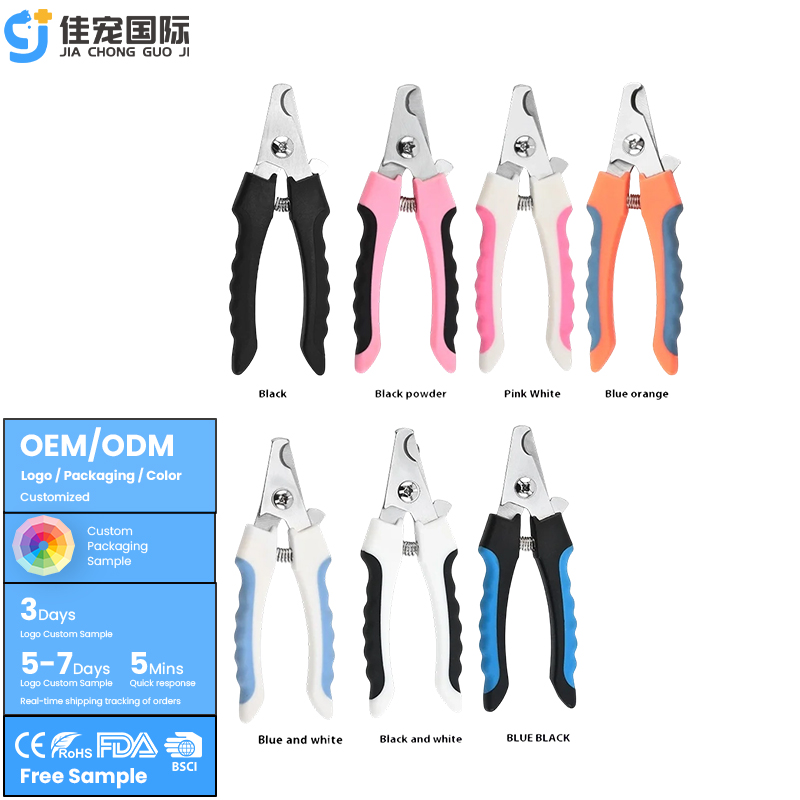 Standard Pet Nail Clipper with Straight Blade and LockA straightforward manual clipper with a straight blade, lever action, non-slip handle, and one-button lock. It suits medium-hardness nails and is easy to maintain, making it a practical option for export orders.View Product →
Guillotine and scissor designs dominate export orders because they are straightforward to manufacture and easy for owners to understand. LED and electric models are the growth segment, driven by owners who want extra safety for dark nails and anxious pets.
- Guillotine 35%
- Scissor 28%
- Electric 22%
- LED 15%
The order mix in the chart highlights a useful sourcing point: electric and LED models carry higher margins, but they also demand stricter component selection and battery compliance. A manufacturer that handles both mechanical and electronic grooming products can balance the two without multiplying your supplier count.
Quality Indicators That Decide Whether a Clipper Sells or Comes Back
Every returned clipper has a story: a blade that rusts after one wash, a spring that flies out on the third squeeze, or a safety guard that shifts and lets the cutter go too deep. The fix starts with specifications.
- Blade steel. 440C stainless steel holds an edge and resists corrosion. 420J2 is cheaper but dulls faster. Carbon steel takes an excellent edge but rusts unless coated.
- Safety guard. A guard or quick-stop limits cutting depth; verify that it remains in place after thousands of cycles.
- Spring and pin. Stainless pins and double springs survive repeated use; zinc-plated springs fail prematurely.
- Handle grip. TPR or silicone overmold reduces hand fatigue for owners and professional groomers alike.
The chart below rates the three common blade steels on hardness and corrosion resistance. Hardness determines how long the edge survives, while corrosion resistance decides the clipper’s lifespan in humid bathrooms and grooming salons.
A reliable supplier will share material specifications without hesitation. At Ningbo Jia Chong, quality control rests with a dedicated team of eight inspectors, and every production line follows documented standards. Their LED clipper is a good example: the light source sits close to the cutting edge, which directly improves the owner’s ability to see the quick on dark nails.
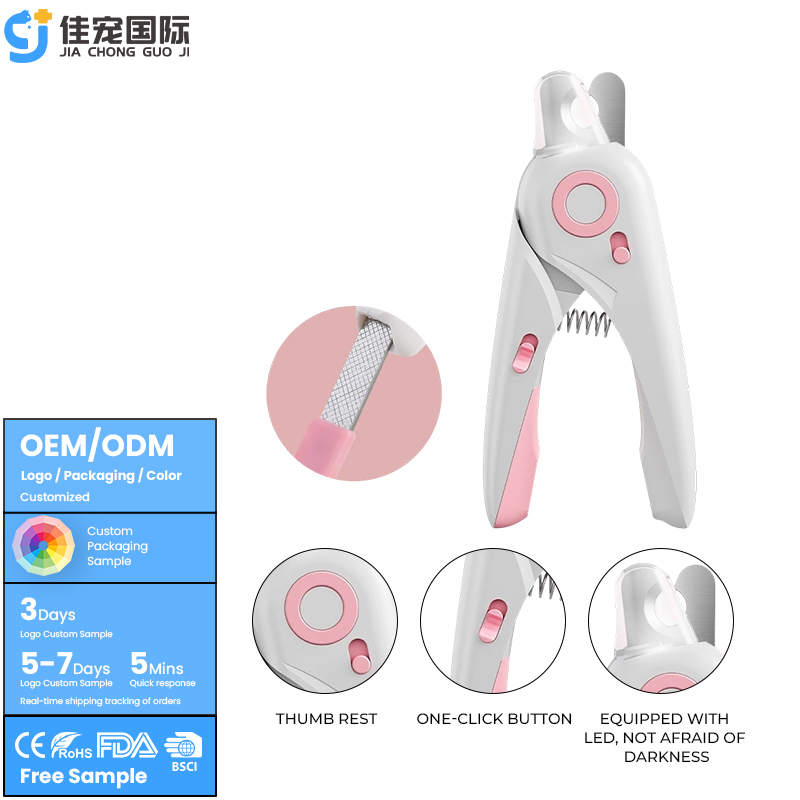 LED Pet Nail Clipper with Quick-Stop and Built-in FileThis clipper features an LED near the cutting edge, a transparent window, and a stopper to help avoid cutting the quick. A built-in file and spring-loaded design add convenience for dark-nail grooming.View Product →
Private Label and OEM/ODM: What a Good Factory Should Handle
Your brand does not have to rely on a stock catalog. A full-service manufacturer can adapt an existing clipper or develop a new one around your target price. That includes handle color, blade finish, packaging inserts and compliance documentation. The conclusion is simple: the ability to execute private label depends on internal design and engineering staff, not on outsourced freelancers.
Ningbo Jia Chong employs five designers and six R&D engineers, so a customer brief can move from sketch to shipped container without changing hands repeatedly. Electric nail clippers push this further because they add motor selection, battery certification and noise testing. A manufacturer with an electronics division, as this company has, is better equipped to handle those extra requirements than a purely mechanical stamping shop.
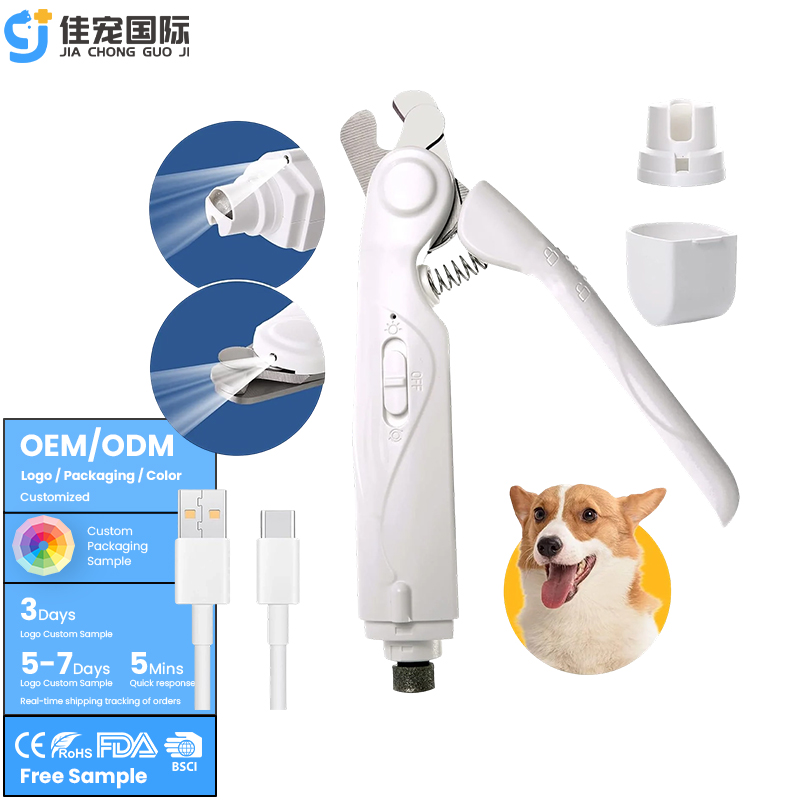 2-in-1 Electric Pet Nail Clipper with Grinding WheelCombines a cutting blade and built-in grinding wheel in one device, with LED lighting and a transparent window. The limiter reduces cut risk, making it a functional choice for electric grooming needs.View Product →
A Practical Checklist for Shortlisting a China Supplier
Use this list during the evaluation stage. It keeps the conversation focused on the details that affect your customers.
- Audit the factory: check production lines, QC headcount and equipment, and ask for live video of a nail clipper assembly run.
- Test samples under real conditions: cut both light and dark nails, and open and close the handles at least 50 times.
- Ask for component documentation: blade steel grade, spring material and relevant test reports.
- Clarify the customization scope: logo, handle color, packaging, instruction inserts and MOQ.
- Evaluate communication: a sales engineer who can explain blade steel differences will also handle order problems responsibly.
The most telling signal is how a supplier answers a small question. If the engineer can compare 420J2 and 440C without hesitation, the factory understands its own product. If not, the sample will tell you soon enough. When the answers line up, contact the Ningbo Jia Chong team directly with your target quantity and market requirements.
Frequently Asked Questions About Pet Nail Clipper Sourcing
What is the typical MOQ for custom pet nail clippers?
Most Chinese manufacturers set an MOQ between 500 and 2,000 pieces for a modified existing design. New tooling and fully custom shapes require higher volumes. Factories that own their molds, as integrated manufacturers do, can often negotiate more flexibly.
How much does a quality pet nail clipper cost from China?
A basic scissor-type clipper with stainless blades can typically range from US$0.50 to US$1.50 FOB. LED and electric models range from about US$2.50 to US$5.00 depending on battery and component choices. Always confirm whether the price includes packaging, labeling and compliance documentation.
How can I verify blade quality before placing a large order?
Ask for the steel grade and a hardness test report. Then test the sample yourself: make 50 cuts on a nail substitute and check whether the edge stays clean. Compare the sample against your expected retail price to see whether the material grade matches.
Can the factory combine nail clippers with other grooming tools in one container?
Integrated pet grooming manufacturers can consolidate nail clippers, brushes, combs and waste bags into one shipment. That lowers per-unit logistics costs and simplifies vendor management for distributors building a broad assortment.
The pet nail clipper is a small product with an outsized responsibility: it touches a sensitive part of the animal and the confidence of the owner. A factory that treats blade steel, spring tension and safety stops as design decisions rather than afterthoughts will produce a tool that sells itself. China’s grooming supply chain has the capacity, the engineering depth and the export experience to deliver that quality at scale. The buyer’s job is to ask the right questions and then test the answers with a sample batch.


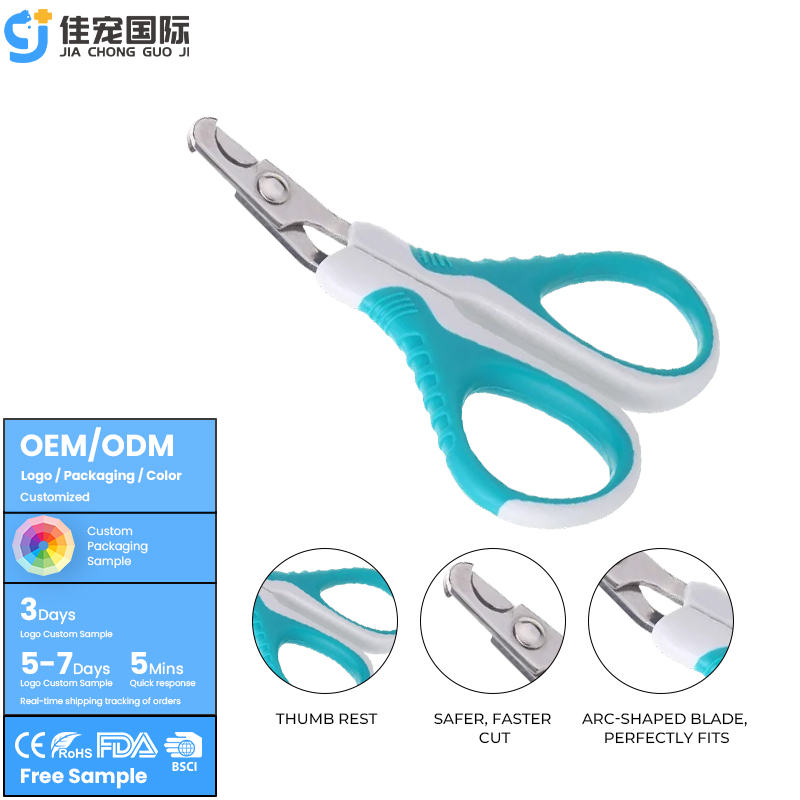


Since its founding in 2009, Jia Chong has devoted itself to the pet-care sector, with a “people-first, pet-embrace” philosophy, delivering professional, high-quality, full-line one-stop solutions for pet families worldwide.
-
 No. 90, Fengming Road, South District, Economic Open Zone, Yuyao City, Zhejiang Province, China
 -
 +86-152 5827 1677
-
 info@nbpetsfamily.com
Copyright © Ningbo Jia Chong International Trade Co., Ltd. All Rights Reserved. OEM/ODM Pet Accessories Manufacturer Pet Products Factory
