

 English
 русский
 Español
 Português
 عربى
 italiano

CE, RoHS and REACH for EU Pet Products: An Importer's Compliance Guide
Content
- 1 CE Marking: Which Pet Products Actually Need It
- 2 RoHS: The Rule That Trips Up Smart Pet Products
- 3 REACH Is Where Most Pet Product Files Fail
- 4 What Belongs in the Purchase Order
- 5 Where Compliance Breaks Down in Real OEM Projects
- 6 FAQ: CE, RoHS and REACH for Pet Products
- 7 Getting the File Right the First Time
A buyer opens a sample box containing a silicone pet bowl, a reflective dog harness and a Bluetooth smart feeder. Three products, three completely different legal routes into the EU market, and only one of them actually needs a CE mark on the packaging.
The short version: CE and RoHS apply to the electrical and electronic parts of a pet range, not to the range as a whole. REACH applies to almost everything, including brushes, leashes, bowls, poop bags and plush toys, because it governs the chemical substances inside the materials themselves. Treating the three as one bundled "CE RoHS REACH certificate" is the single most common reason a pet product file collapses at customs or at a retailer's compliance desk.
What follows is how the three regimes actually divide up a pet product catalogue, what evidence is worth collecting, and where real OEM projects tend to break down.
CE Marking: Which Pet Products Actually Need It
CE is not a quality badge and it is not issued for a category. It is a manufacturer's declaration that a product meets specific EU directives or regulations, and it only exists where one of those texts covers the product.
In a pet catalogue, the CE-relevant items are the ones with a circuit board:
- Smart feeders, smart water dispensers, automatic litter boxes and air purifiers with Wi-Fi, Bluetooth or app control fall under the Radio Equipment Directive 2014/53/EU, which also pulls in the EMC and safety requirements.
- Mains-powered units operating between 50 and 1000 V AC additionally fall under the Low Voltage Directive 2014/35/EU.
- LED leashes, electronic training devices and heated beds without a radio module usually fall under the EMC Directive 2014/30/EU together with RoHS.
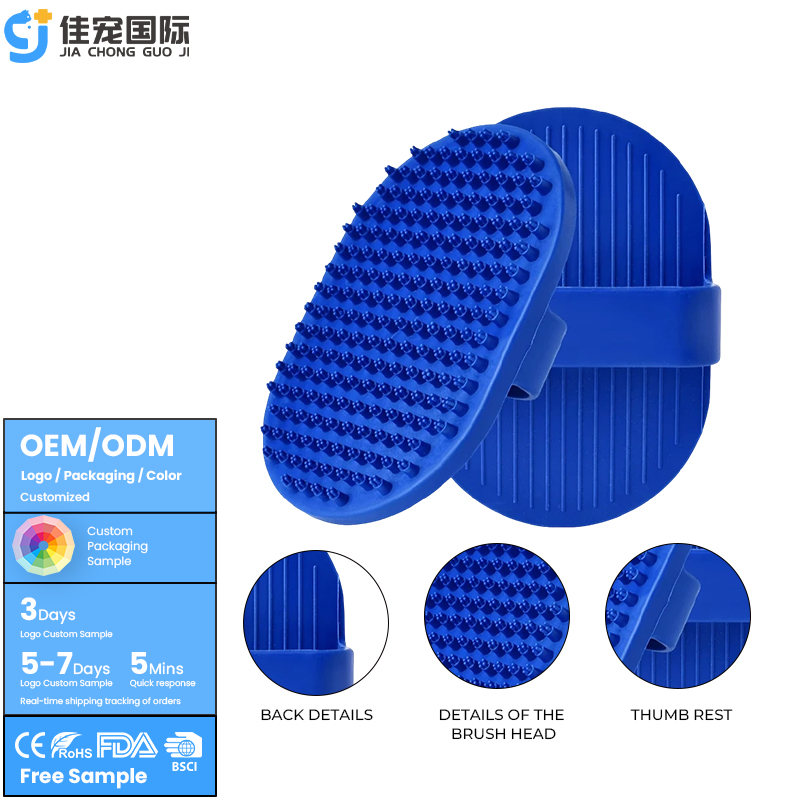
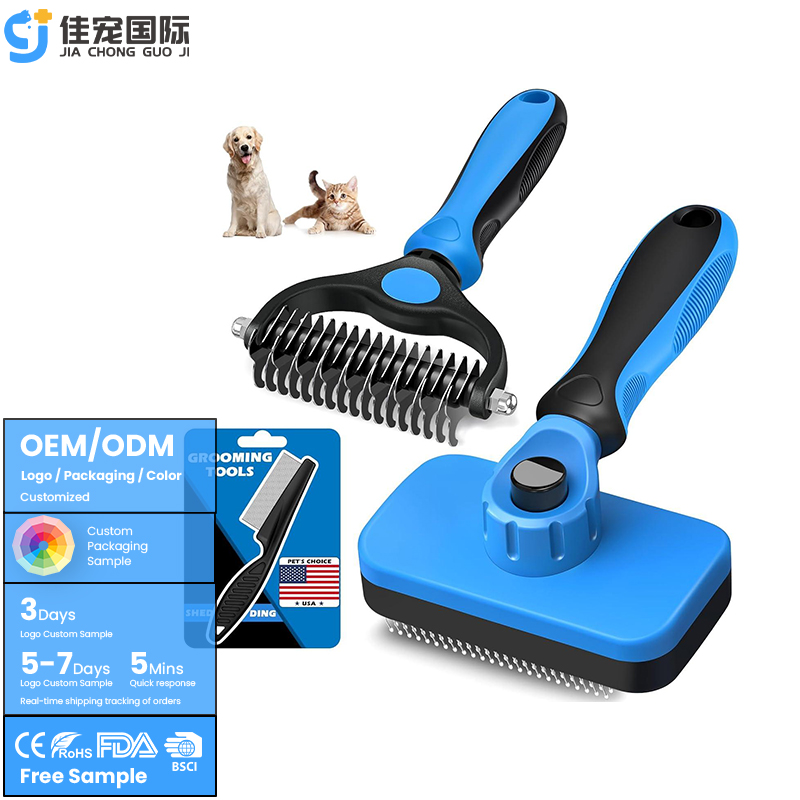
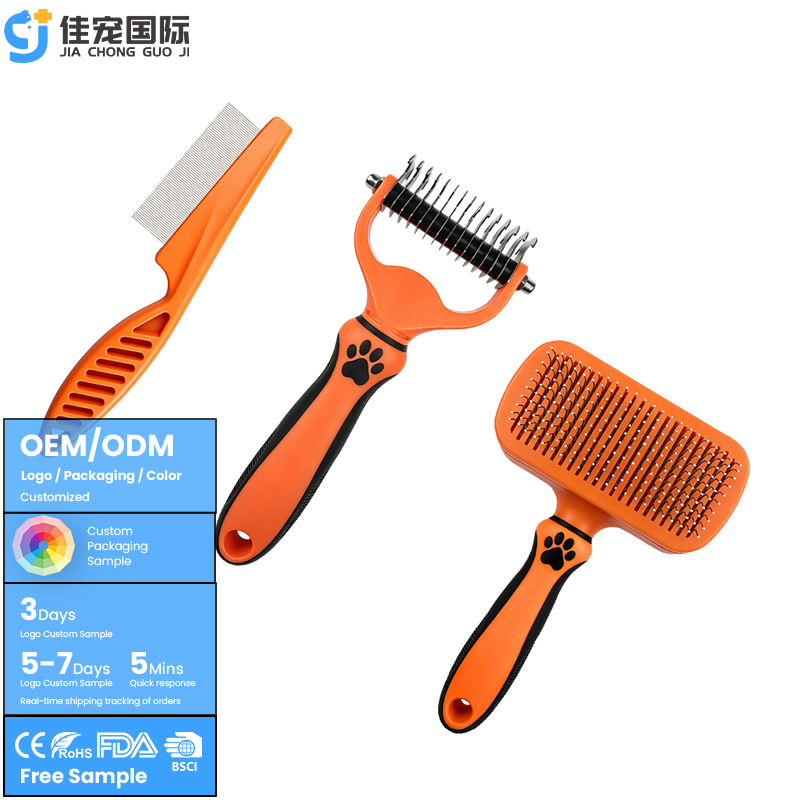
- Rope leashes, ceramic bowls, plush toys, nylon harnesses, grooming tools and poop bags carry no CE obligation. A CE sticker printed on a non-electrical pet item is not extra safety; it is a false declaration the importer has to answer for.
The deliverable is an EU Declaration of Conformity that names the directives, the harmonised standards applied, the authorised signatory in the EU, and which is retained for ten years after the last unit is placed on the market. A test report is supporting evidence, not the declaration itself.
RoHS: The Rule That Trips Up Smart Pet Products
RoHS (Directive 2011/65/EU, as amended) restricts ten substances and applies per homogeneous material, not per product. Lead, mercury, hexavalent chromium, PBB and PBDE are capped at 0.1% by weight; cadmium at 0.01%; the four phthalates DEHP, BBP, DBP and DIBP at 0.1% in plasticised components.
Failures in pet electronics cluster in predictable places: PVC-sheathed low-voltage cable where the plasticiser is DEHP, decorative chrome plating on a bowl housing, solder on cheap control boards, and recycled ABS that carries legacy contaminants. An exemption may exist for a specific application, but exemptions expire, so an old test report that relied on one is a liability rather than an asset.
What to request: a RoHS report from an ISO/IEC 17025-accredited laboratory, broken down by homogeneous material, plus the bill of materials and a statement of which components were tested. A single pass/fail line for the finished unit tells you almost nothing about where a failure would appear.
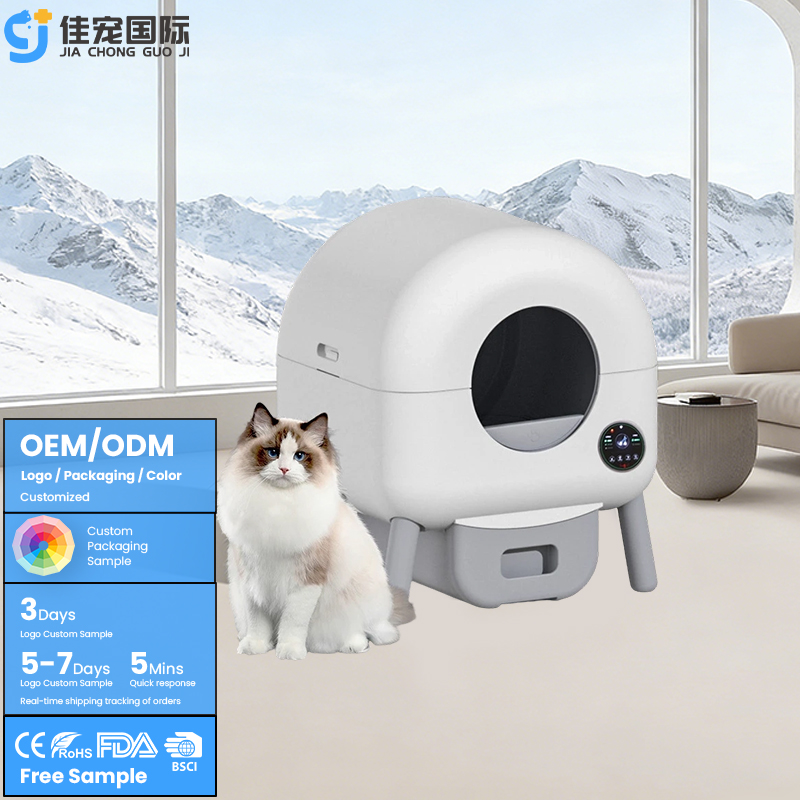 76L Automatic Self-Cleaning Cat Litter BoxA 76L self-cleaning litter box with infrared anti-pinch sensors, app control, and notifications; useful when reviewing component materials and safety features.View Product →
REACH Is Where Most Pet Product Files Fail
REACH (EC 1907/2006) creates two separate obligations that importers often merge into one.
The first is Annex XVII restrictions, which set hard limits on substances in articles: phthalates in plasticised PVC, PAHs in rubber and black plastic, azo dyes in textiles and leather, nickel release from metal hardware, plus lead, cadmium and formaldehyde limits. These are enforced by market surveillance authorities through spot checks at retail.
The second is the SVHC obligation: if a substance on the candidate list is present above 0.1% by weight in any article, the supplier must provide enough information for safe use (Article 33), and the EU importer must file a SCIP notification. The list is updated twice a year and now runs to well over 240 entries, so a declaration that does not state which version of the list it was checked against has no value.
The threshold is calculated per article, not per product. A harness is not one article: the webbing, the buckle, the padding and the rubberised logo are assessed separately, which is exactly the level of detail most suppliers skip.
| Substance group | Typical limit | Where it appears in pet products | Evidence to request |
|---|---|---|---|
| Phthalates (DEHP, DBP, BBP, DIBP) | 0.1% each in plasticised material | PVC leash sheaths, bowl grips, bag dispensers | Phthalate screen by GC-MS per material |
| PAHs | 1 mg/kg (0.5 mg/kg for toy and childcare) | Rubber paw grips, black TPR pads, soft handles | PAH screen covering all eight listed compounds |
| Azo dyes and aromatic amines | 30 mg/kg | Webbing, plush, fabric carriers, rope toys | Dyestuff test on each textile colourway |
| Nickel release | 0.5 µg/cm²/week | Buckles, D-rings, collar hardware | Nickel release test on prolonged skin contact parts |
| Lead and cadmium | 0.05% and 0.01% | Coated metal, coloured plastics, solder joints | Heavy metal screen, ideally combined with RoHS |
One more layer applies to the packaging and to any environmental claim. The EU rules on green claims tighten from 2026 and generic wording such as "eco-friendly" or "100% biodegradable" will need substantiation. For a compostable poop bag that means testing against a recognised standard (EN 13432 for industrial composting), with the certification scope stated clearly on pack.
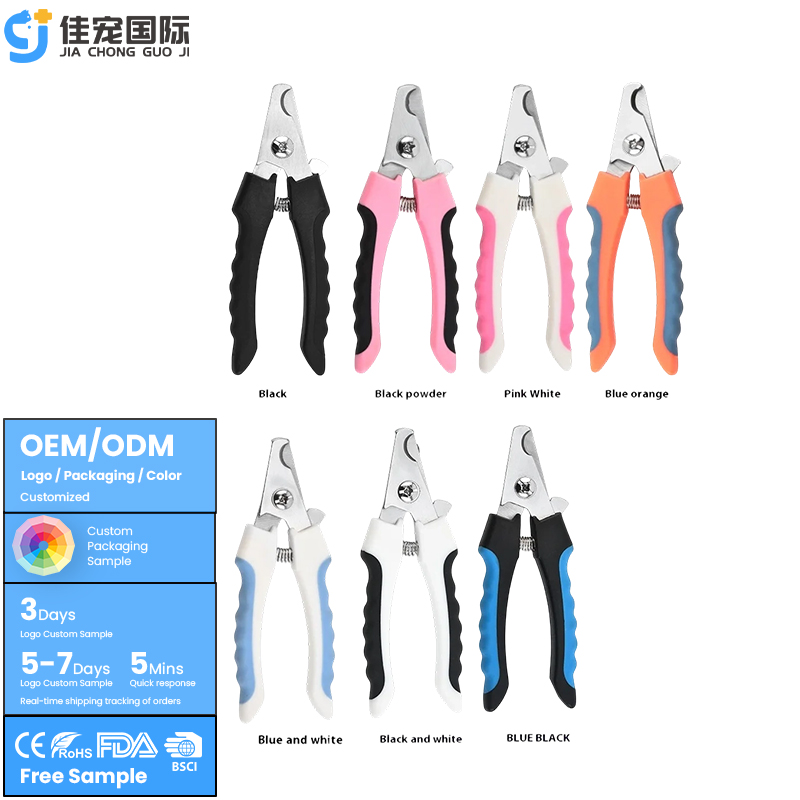
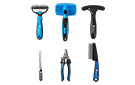
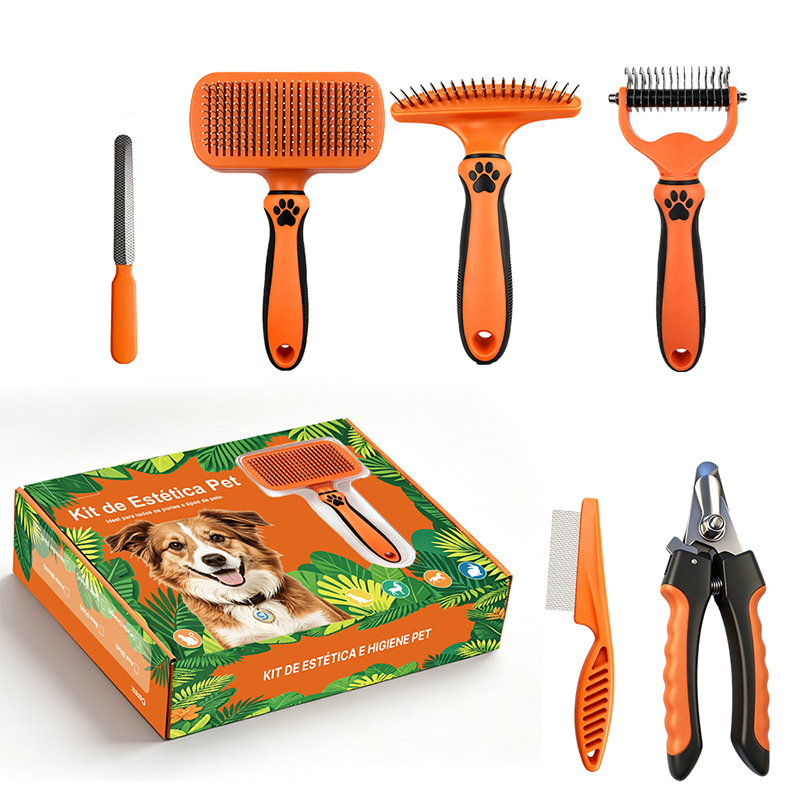 6-in-1 Pet Grooming and Beauty SetSix-piece kit with deshedding, detangling, smoothing brushes, nail clipper, and storage case; helps confirm contents and specifications before ordering.View Product →
What Belongs in the Purchase Order
Compliance is decided long before the container ships, in the wording of the specification. Put these in the order confirmation rather than chasing them at inspection time:
- A material declaration per component, not per SKU, listing polymer type, colourant and any additives.
- Test reports dated within twelve months, from an accredited laboratory, with the sample traceable to the production line that will run the order.
- An EU Declaration of Conformity for every electrical SKU, naming the directives and harmonised standards applied.
- An SVHC statement that quotes the candidate list version date and the calculation basis (per article).
- A change-control clause: no substitution of resin, colourant, cable supplier or hardware without written approval and re-test.
- Packaging documentation covering heavy metal limits and extended producer responsibility registration in the destination country.
- General Product Safety Regulation readiness: an EU responsible person, batch identification on the product, and the warnings and instructions required for online listings.
- For "biodegradable" or "compostable" claims, a certificate that states the standard, the environment (industrial versus home) and the test method.
Where Compliance Breaks Down in Real OEM Projects
Three failure patterns account for most problems we see in pet product programmes.
The certificate belongs to a different supplier
A trading company forwards a REACH or RoHS report for a buckle it bought from a third party two years ago, but the buckle on your harness comes from a different moulding shop. The document is genuine and irrelevant at the same time.
Samples and mass production are not the same product
Approved samples are often made with virgin resin and a certified colourant; production runs may switch to regrind or a cheaper masterbatch. Because REACH and RoHS are material-level obligations, that substitution quietly invalidates the entire file. The only practical defence is a signed change-control clause plus per-batch declarations from a factory whose process you have actually seen.
One test report is stretched across a whole range
A 65 L and a 76 L litter box share a control board but not a housing, and a grooming kit with six attachments contains six material combinations. Splitting test scopes by component family keeps cost sensible without leaving gaps.
That is why we treat the compliance file as part of the development process rather than a document produced at the end. Our production base in Ningbo runs 18 lines across 10,000 m², with in-house design and engineering teams that can confirm material specifications before tooling is cut. Buyers who want to see how per-component documentation is handled on a live line can review it during a factory visit.
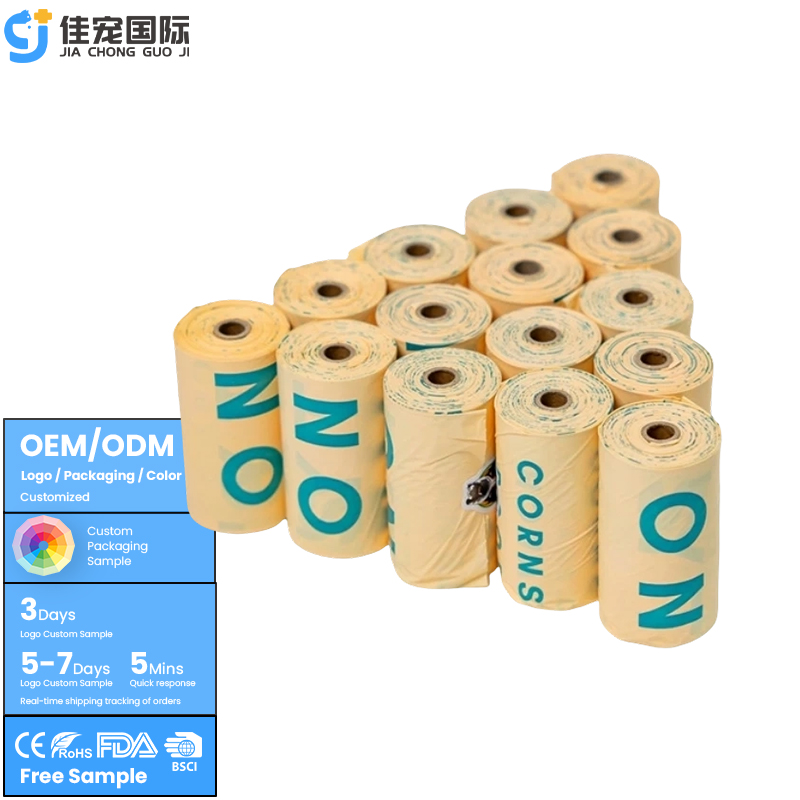 Biodegradable Dog Poop Bag with Odor ControlCustomizable EPI+HDPE dog waste bag with lavender odor control and a 1–3 year decomposition claim; relevant for checking consumer-product safety and traceability information.View Product →
FAQ: CE, RoHS and REACH for Pet Products
Is CE marking required for pet toys?
No. The Toy Safety Directive covers toys intended for children under 14, and pet toys sit outside it. Pet toys are still consumer products and must be safe under the General Product Safety Regulation, which means a risk assessment and traceability, but not a CE mark.
Is there such a thing as a "CE certificate"?
Not in the sense suppliers usually mean. There is an EU Declaration of Conformity issued by the manufacturer or importer, supported by test reports and a technical file. A third-party "CE certificate" may exist as a voluntary document, but it is not what market surveillance asks for.
Does every batch need REACH testing?
REACH does not mandate testing frequency; it mandates compliance. A risk-based approach works: test each new material and each new supplier, retest annually or after any change, and rely on written declarations in between. Testing every shipment is expensive and does not remove the obligation.
Can a poop bag be labelled biodegradable in the EU?
Only with evidence. Industrial compostability is demonstrated against EN 13432; home compostability needs a separate certification and a clearly different claim. Vague wording without a named standard is exactly what the incoming green claims rules target.
Getting the File Right the First Time
Sort the range by regulatory route before you sort it by price. Electrical SKUs need CE, RoHS and, where a radio module is involved, RED documentation. Everything else lives under REACH plus general product safety. Once that split is on paper, the questions to a supplier become specific, the test budget becomes predictable, and a failed shipment becomes an exception rather than a surprise.
If you are planning a range that mixes smart devices, grooming tools and waste bags, the practical next step is to send us the SKU list and destination markets so the documentation scope can be confirmed against the actual materials. You can request a quote and compliance scope and we will map each item to the evidence it needs.











Since its founding in 2009, Jia Chong has devoted itself to the pet-care sector, with a “people-first, pet-embrace” philosophy, delivering professional, high-quality, full-line one-stop solutions for pet families worldwide.
-
 No. 90, Fengming Road, South District, Economic Open Zone, Yuyao City, Zhejiang Province, China
-
 +86-152 5827 1677
-
 info@nbpetsfamily.com
Copyright © Ningbo Jia Chong International Trade Co., Ltd. All Rights Reserved. OEM/ODM Pet Accessories Manufacturer Pet Products Factory
